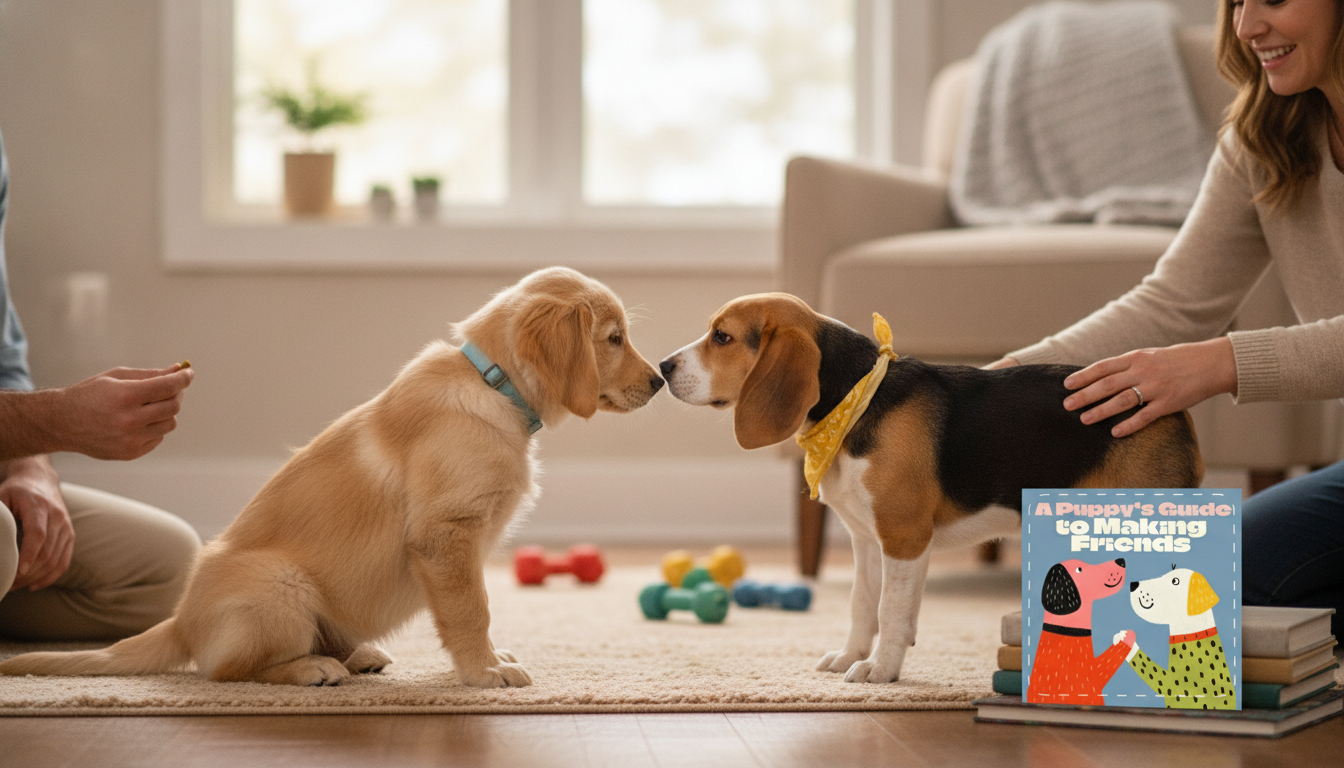
Early dog-to-dog experiences shape how a puppy handles new situations for life. Thoughtful socialization helps prevent fear, reactivity, and overwhelmed greetings—while building calm confidence around unfamiliar dogs. This guide breaks down safe, step-by-step ways to introduce puppies to other dogs, read body language, and create positive play sessions using simple routines that fit busy schedules.
Socialization isn’t about letting your puppy meet every dog on the sidewalk. The real goal is comfort and neutrality: your puppy can notice other dogs, stay relaxed, and choose polite interaction when it’s appropriate.
Good socialization is safe socialization. Talk with your veterinarian about vaccines and parasite prevention, then choose low-risk setups that let your puppy learn without being overwhelmed.
| Setting | Best for | Risk level | Tips to make it safer |
|---|---|---|---|
| Friend’s calm, vaccinated adult dog at home | First greetings and body-language practice | Low | Start parallel walking; allow brief sniffs; interrupt often for treats |
| Puppy kindergarten with vetted requirements | Supervised play and learning around other puppies | Medium | Choose classes with small groups and enforced breaks |
| Quiet park at a distance | Watching dogs without contact | Low | Reward calm observation; increase distance if the puppy tenses |
| Busy dog park | Confident adult dogs with solid skills (not most puppies) | High | Avoid for early socialization; pick calmer alternatives |
Your puppy learns fastest from steady, polite dogs. Think of the other dog as a teacher—not a playmate your puppy has to “win over.”
This routine keeps greetings brief, friendly, and easy to repeat. The win is a relaxed puppy who can disengage and re-engage without stress.
| Signal | What it often means | What to do |
|---|---|---|
| Loose tail and soft eyes | Comfort and curiosity | Reward calm; allow brief interaction |
| Play bow and bouncy movement | Invitation to play | Let play start; add short breaks |
| Freezing or stiff posture | Rising stress or conflict risk | Increase distance; interrupt and reset |
| Lip licking, yawning, turning away | Appeasement/uncertainty | Slow down; keep sessions shorter |
| Snarling/snap with immediate relaxation | Boundary-setting | End interaction; choose calmer partner next time |
If you want a structured, printable approach for repeatable sessions, Paws & Play: A Puppy’s Guide to Making Friends (digital eBook) lays out simple routines, progress checkpoints, and reset strategies that help keep greetings calm and consistent.
For busy households, predictable daily routines also reduce overstimulation. An Automatic Pet Feeder with Tilted Double Bowls and Water Fountain can help support steady feeding and hydration patterns, which often makes it easier to schedule short training sessions and timed decompression breaks after play.
For additional puppy socialization recommendations, review the guidance from the American Veterinary Medical Association (AVMA), the American Kennel Club (AKC), and the ASPCA.
Ask a veterinarian about vaccine timing and local disease risk, then start with controlled, low-risk exposure like calm, vaccinated dogs in clean environments. If you’re unsure, begin with distance-based socialization (watching dogs calmly from afar) and gradually close the gap as your puppy stays relaxed.
Dog parks are often unpredictable and can overwhelm a puppy with fast approaches, rude play, and limited escape options. Safer alternatives include parallel walks, one-on-one playdates with known dogs, or well-run puppy classes that screen participants and enforce breaks.
Play is getting too rough when you see stiffness, repeated pinning without release, relentless chasing, cornering, or a puppy that can’t disengage—even during pauses. Add frequent breaks, switch to calmer activities, or end the session if either puppy can’t recover quickly.









Leave a comment