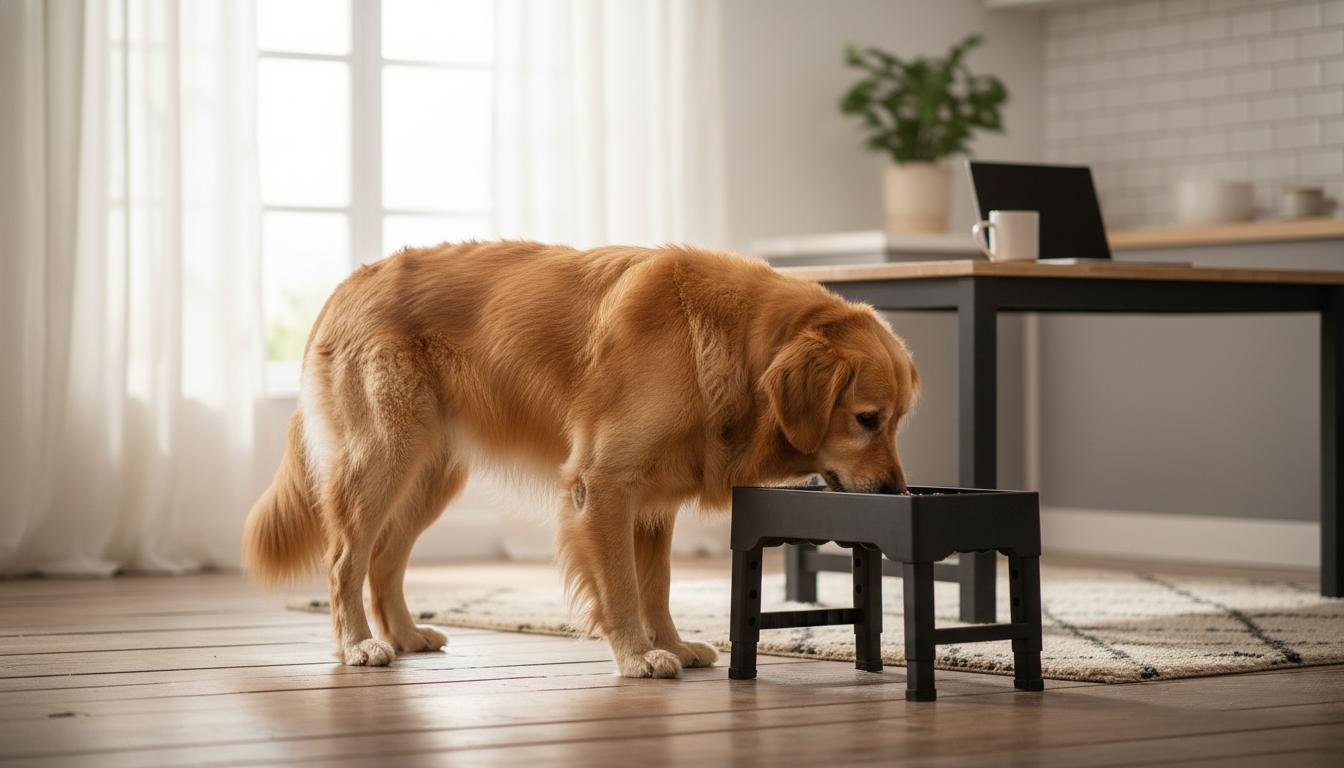
An elevated, height-adjustable feeding station can reduce neck strain, keep mealtimes tidier, and make gulping less likely when paired with a slow-feeder bowl. This guide covers who benefits most, what to look for, how to set the right height, and everyday care tips for a safer, calmer routine—especially for large breeds and dogs that eat too fast.
Floor-level bowls work fine for many dogs, but large and tall breeds often end up bending down repeatedly—especially for water. A raised setup can make daily feeding feel smoother and less physically demanding.
Some dogs don’t just “eat fast”—they inhale. A slow-feeder bowl adds physical features that interrupt scooping mouthfuls, nudging your dog toward licking, smaller bites, and more chewing.
For additional context on fast eating and practical interventions, see the AKC overview: Why dogs eat too fast and what to do.
Elevated, adjustable stations are a strong match for many big dogs, but the “best” setup still depends on your dog’s build, breathing style, and comfort while swallowing.
Instead of chasing a single measurement, aim for a posture that looks “neutral” and repeatable. When the height is right, many dogs look less tense and pause naturally between bites.
| Dog type | What to look for | Adjustment tip |
|---|---|---|
| Large adult dog | Back stays fairly straight; neck only slightly angled | Raise until bending is minimal, but paws stay planted comfortably |
| Senior dog | Less shifting of feet; calmer stance | Increase height gradually over several meals to confirm comfort |
| Fast eater | Less gulping; more pauses between bites | Use slow feeder + slightly higher setting to discourage scooping bites |
| Multi-dog home | No crowding; each dog eats at own pace | Separate stations; place stands a few feet apart |
For large dogs, the “little” details matter: wobble, bowl clang, and hard-to-clean grooves can turn a helpful station into a daily annoyance. Prioritize a build that stays quiet, steady, and easy to maintain.
If you’re refreshing your feeding routine overall, the AVMA feeding resource is a helpful baseline for safe, consistent nutrition planning: AVMA: Tips for choosing the right food for your pet.
For food safety and handling basics (particularly helpful with wet or raw diets), the FDA guidance is a strong reference: FDA: Pet food safety and handling.
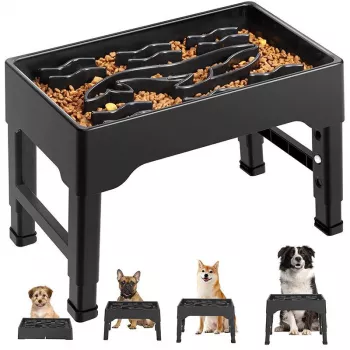
For a single setup that covers both posture and pacing, Adjustable Elevated Dog Bowls with Slow Feeder for Large Dogs combines adjustable height with a slow-feeder bowl, making it easier to match your dog’s stance and reduce “vacuum-style” eating.
The slow-feeder pattern creates barriers that encourage smaller bites and more licking/chewing instead of gulping. When paired with an elevated stand set to a comfortable height, many dogs scoop less frantically and settle into a steadier rhythm; start with smaller portions and spread food evenly for best results.
Aim for a neutral stance where your dog doesn’t hunch down or stretch upward, with the bowl rim near the lower chest as a starting point. Adjust over a few meals based on comfort and swallowing, since ideal height varies by build, age, and mobility.
Yes—press wet or raw food lightly into the grooves so it doesn’t slide into one easy path, and rinse promptly to prevent residue. If food gets stuck in tight patterns, a simpler slow-feeder design is often easier to keep clean.








Leave a comment