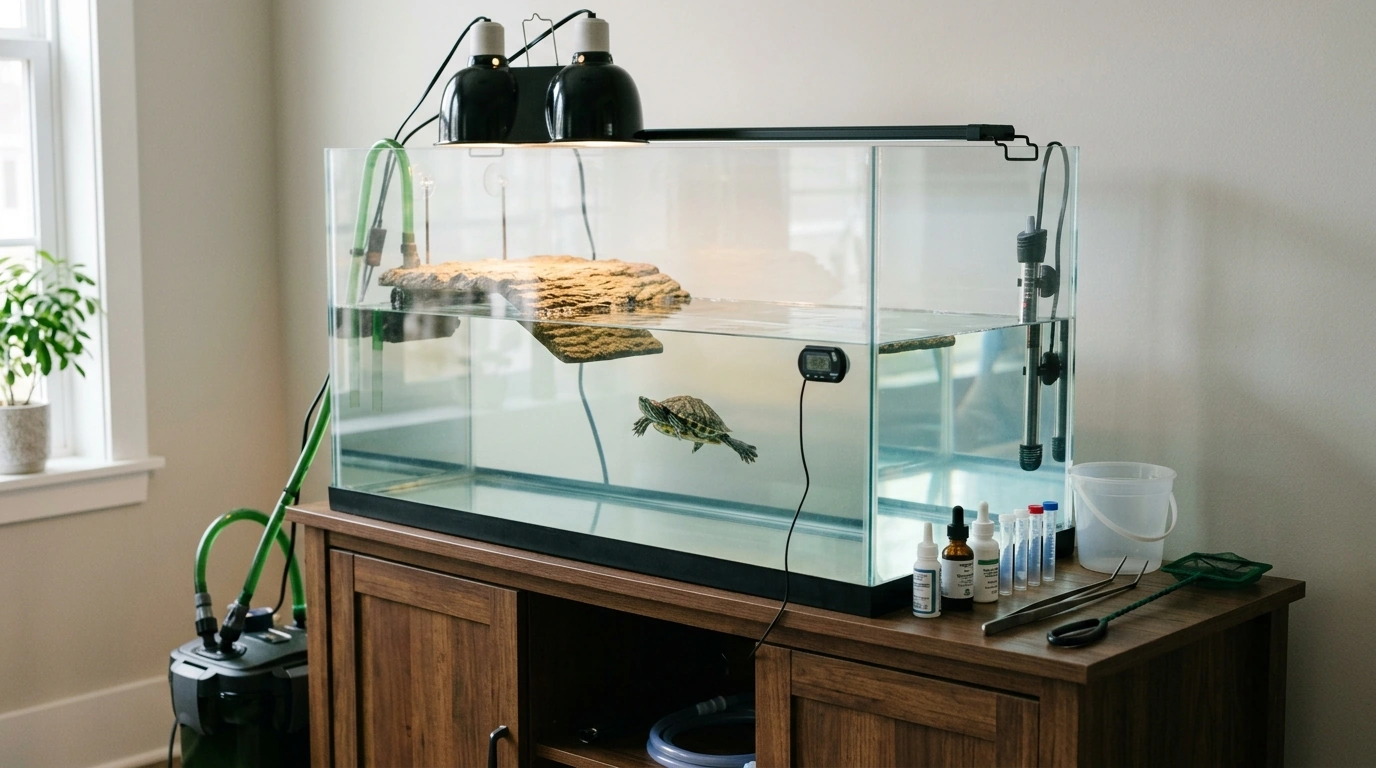
A healthy turtle tank comes down to a few non-negotiables: space, clean water, proper heat and UVB, and a basking area that’s safe and easy to use every day. A printable setup guide and digital checklist turns those essentials into a clear, step-by-step plan—so nothing important gets missed during setup or weekly maintenance.
Before buying equipment, it helps to remember two realities about turtle care: turtles are powerful swimmers that grow fast, and they produce a lot more waste than most fish. Planning for the adult turtle and building a simple maintenance routine from day one prevents most “mystery” odor, algae, and shell-health issues later.
Start by confirming what type of turtle you have (aquatic vs. semi-aquatic) and what its adult size will be. A hatchling can look comfortable in a small tank for a few weeks, but an adult needs real swimming volume plus a fully dry basking platform.
When comparing tanks, prioritize footprint and water volume over height alone. A long, wide tank gives more usable swimming space and makes it easier to fit a stable dock that allows complete drying. Choose a solid, level location away from direct sun (overheating risk), drafts (temperature swings), and constant vibration from heavy foot traffic. Make sure you have safe access to outlets and an easy path to a sink or water source for water changes.
Finally, plan the workflow. Decide where supplies will live, where buckets will sit during water changes, and how the basking platform can be removed for cleaning without turning maintenance into a big project.
The right equipment makes turtle care predictable instead of stressful. These core items cover safety, water quality, and daily heat/UVB needs.
| Category | Item | Why It Matters | Setup Tip |
|---|---|---|---|
| Water quality | High-capacity filter | Reduces waste buildup and odor | Choose a model rated 2–3x tank volume for turtles |
| Basking | Basking dock + ramp | Allows full drying and thermoregulation | Confirm the turtle can climb easily without slipping |
| Heat | Basking heat bulb | Creates a warm basking spot | Measure surface temperature at the basking zone |
| UVB | UVB lamp | Supports calcium use and shell health | Set correct distance and replace per manufacturer timeline |
| Testing | Water test kit | Prevents invisible water-chemistry problems | Track readings weekly until stable, then on a routine |
If you want a ready-to-print plan for build day plus an easy way to track recurring tasks, Turtle Tank Setup Essentials printable guide and digital checklist organizes setup steps, weekly checkpoints, and replacement dates in one place.
A strong layout creates two distinct zones: swimming water deep enough for comfortable movement and a fully dry basking area where the turtle can warm up and dry completely. Make access to the dock effortless—especially for juveniles—by keeping ramp angles manageable and adding traction where needed.
Place UVB so it shines directly on the basking area at the manufacturer’s recommended distance. Don’t position UVB over glass or plastic lids that block UVB output. Replace UVB bulbs on schedule even if they still look bright—visible light can remain while UVB output declines over time. For broader husbandry guidance and preventive-care concepts, the Merck Veterinary Manual’s reptile husbandry overview is a helpful reference point.
For a simpler recurring-reminder format (especially if you also run fish or shrimp tanks), The Fun Aquarium Setup Checklist digital download can be used alongside turtle-specific notes for maintenance logging.
Also plan safe handling and hygiene. Turtles and their habitats can carry Salmonella, so wash hands after maintenance and keep equipment separate from food-prep areas. The CDC’s Salmonella guidance explains key precautions that apply to reptiles as well. For veterinarian directories and care standards, the Association of Reptile and Amphibian Veterinarians (ARAV) is a reputable resource.
Plan on partial water changes on a consistent schedule, then adjust based on tank size, filtration strength, feeding habits, and test results. Use ammonia/nitrite/nitrate readings to guide timing—there isn’t a single schedule that fits every setup.
Yes—heat and UVB do different jobs. A heat lamp supports warming and drying, while UVB supports vitamin D3/calcium metabolism for shell and bone health, and it must be positioned and replaced according to the bulb’s specifications.
Use strong filtration, keep the system cycled, remove uneaten food, and do regular partial water changes without over-scrubbing beneficial bacteria. Also check for trapped debris in décor, under docks, and in filter pads where waste can rot.








Leave a comment