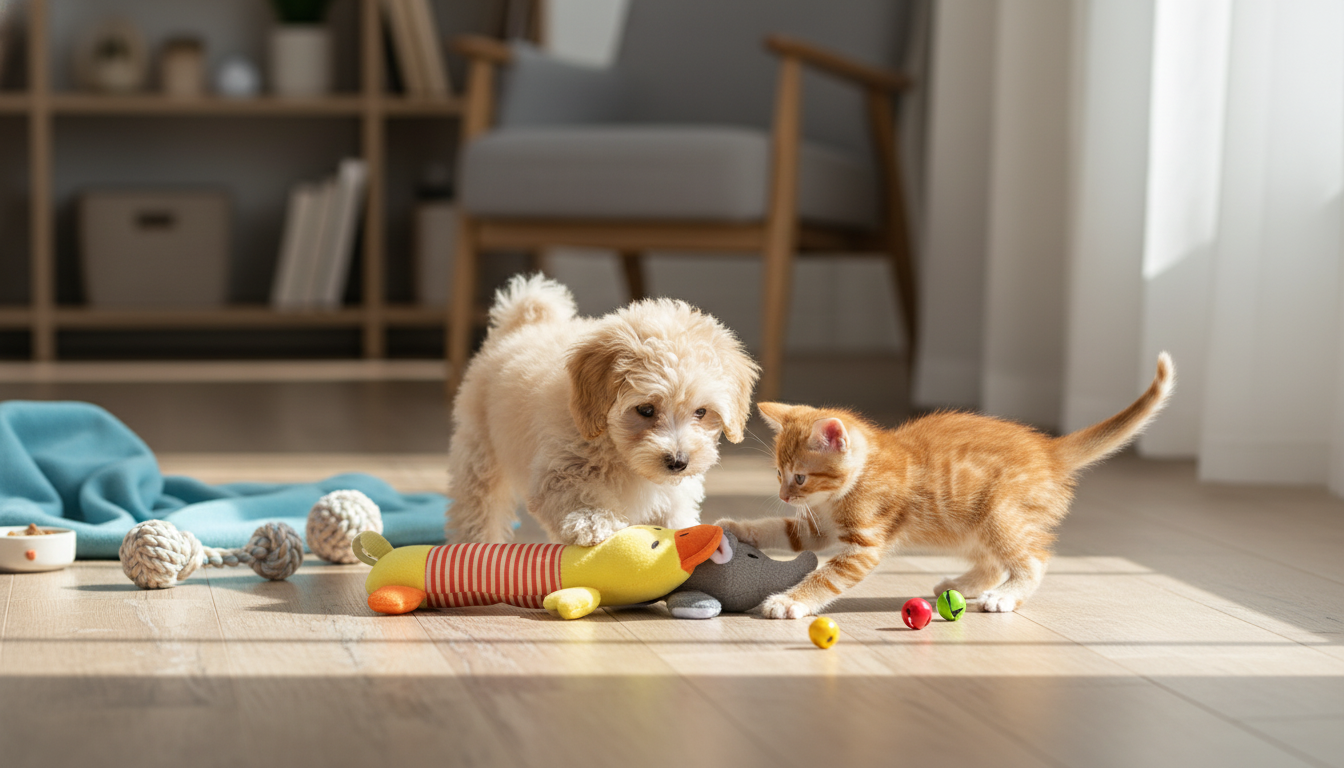
A soft plush squeaky toy can turn quick bursts of play into daily enrichment for small pets—especially in apartments or during indoor time. The mix of a cozy texture and a satisfying squeak often encourages stalking, pouncing, carrying, and gentle chewing without the noise or bounce of heavier toys. Below are practical ways to use a plush squeaker toy well, keep sessions calm, and know when it’s time to retire it. For more guidance, see Hidden Hazards: A Guide To The Potential Dangers Of Pet Toys.
What Makes a Plush Squeaky Toy a Good Everyday Play Option
- Comfort plus feedback: Plush offers a soft “comfort play” feel, while the squeak adds instant feedback that can spark chase behavior.
- Redirects busy mouths and paws: It helps guide nibbling, light chewing, and playful pouncing toward an appropriate item.
- Flexible play styles: Works for short interactive games (toss, light tug, chase) and supervised solo play.
- Small-pet friendly: Many smaller pets ignore heavy rubber toys, but will happily carry or bat around a lightweight plush.
At-a-Glance Details
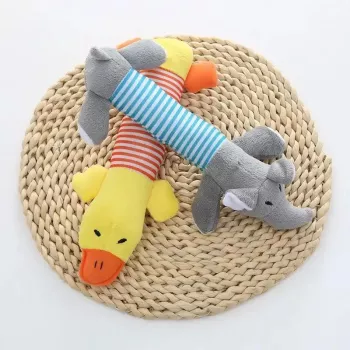
For a simple, budget-friendly way to add variety to a toy rotation, the Soft Plush Squeaky Chew Toy for Small Dogs & Cats is designed for pets that enjoy plush textures and squeaky stimulation. Its lightweight shape suits indoor games like gentle fetch or hallway tosses, and it’s an easy add-on when boredom starts showing up as extra zoomies or mischief. For further reading, see How to Pick the Best and Safest Dog Toys – Humane World for Animals.
Quick Specs
| Item |
Details |
| Product |
Soft Plush Squeaky Chew Toy for Small Dogs & Cats |
| Best for |
Small dogs, kittens, and adult cats that enjoy plush play |
| Play style |
Chase, pounce, carry, gentle chew, light fetch (supervised) |
| Sound |
Built-in squeaker |
| Price |
USD $2.32 |
| Availability |
In stock |
Best Use Cases for Small Dogs
- Gentle fetch: Keep tosses short, especially on carpet or a rug, to reduce impact and slipping. A few clean reps can burn energy without riling your dog up.
- Training break reward: A quick squeak-and-toss can act like a reset between commands, rewarding focus without needing treats every time.
- Comfort carry: Some small breeds love a “prize” they can pick up and parade around the room, which can satisfy natural carrying instincts.
- Indoor enrichment on rainy days: When the weather limits walks, a plush squeaker can provide a quick outlet for energy in a smaller space.
Best Use Cases for Cats
- Prey-play routine: Use the squeak sparingly to trigger interest, then toss the toy to invite stalking and pouncing. Too much noise can make some cats cautious.
- Nighttime energy management: A short play session before feeding often helps cats settle afterward, especially in multi-cat homes.
- Confidence building: Soft toys can feel less intimidating than hard rolling toys for shy cats that startle easily.
- Rotation strategy: Leave it out for a few days, then swap it with another toy to keep novelty high and reduce “seen it already” boredom.
Safety and Supervision Tips
- Match the toy to chewing style: Plush is best for gentle chewers. If your pet shreds fabric quickly, choose a tougher material instead.
- Inspect before each session: Check seams and fabric. Stop use if stitching opens, threads loosen, or stuffing becomes accessible.
- Don’t leave it unattended with fabric-eaters: Avoid unsupervised access for pets that ingest cloth, squeakers, or stuffing.
- Multi-pet homes need extra monitoring: Supervise to prevent resource guarding or rough tugging that can tear plush.
For general guidance on choosing safer toys and avoiding common hazards, review ASPCA: Dog Toy Safety Tips and AVMA: Selecting Safe Pet Toys.
How to Introduce It (So It Stays Interesting)
- Start short: Aim for 3–5 minutes, then put the toy away. Short sessions build anticipation and keep squeakers “special.”
- Use the squeak as a cue: Squeak once or twice, then toss or drag the toy along the floor. Constant squeaking can tip some pets into frantic play.
- Small dogs: Pair play with a calm “all done” cue and a brief pause to prevent overstimulation and demand barking.
- Cats: Mimic prey—low, quick movements and brief stops. Let your cat “catch” the toy regularly to prevent frustration.
Cleaning and Care
When It’s Time to Replace the Toy
Alternatives and Add-Ons for Variety
If your pet’s interest fades quickly, variety usually works better than “more noise.” Consider alternating textures and sensory cues across the week. Two helpful in-stock add-ons include the Interactive Cat Chew Toy with Bells & Catnip for cats that respond to scent and jingling, and the LED Cat Water Fountain as a daily wellness complement that can encourage more frequent drinking.
Quick Comparison of In-Stock Options
Simple Play Routines (5 Minutes Each)
FAQ
Is a plush squeaky toy safe for aggressive chewers?
Plush toys are usually best for gentle chewers. If your pet tears fabric or tries to swallow pieces, supervise closely and switch to a more durable toy style.
Can cats use squeaky toys meant for small dogs?
Yes, many cats enjoy them as long as the size is manageable and play is supervised. Use the squeak sparingly and choose a toy your cat can comfortably carry or pounce on.
How often should this type of toy be cleaned or replaced?
For frequent play, weekly spot-cleaning is a good baseline, with deeper cleaning as needed. Replace the toy when seams loosen, stuffing or the squeaker becomes accessible, or it can’t be cleaned effectively.
Recommended for you








Leave a comment