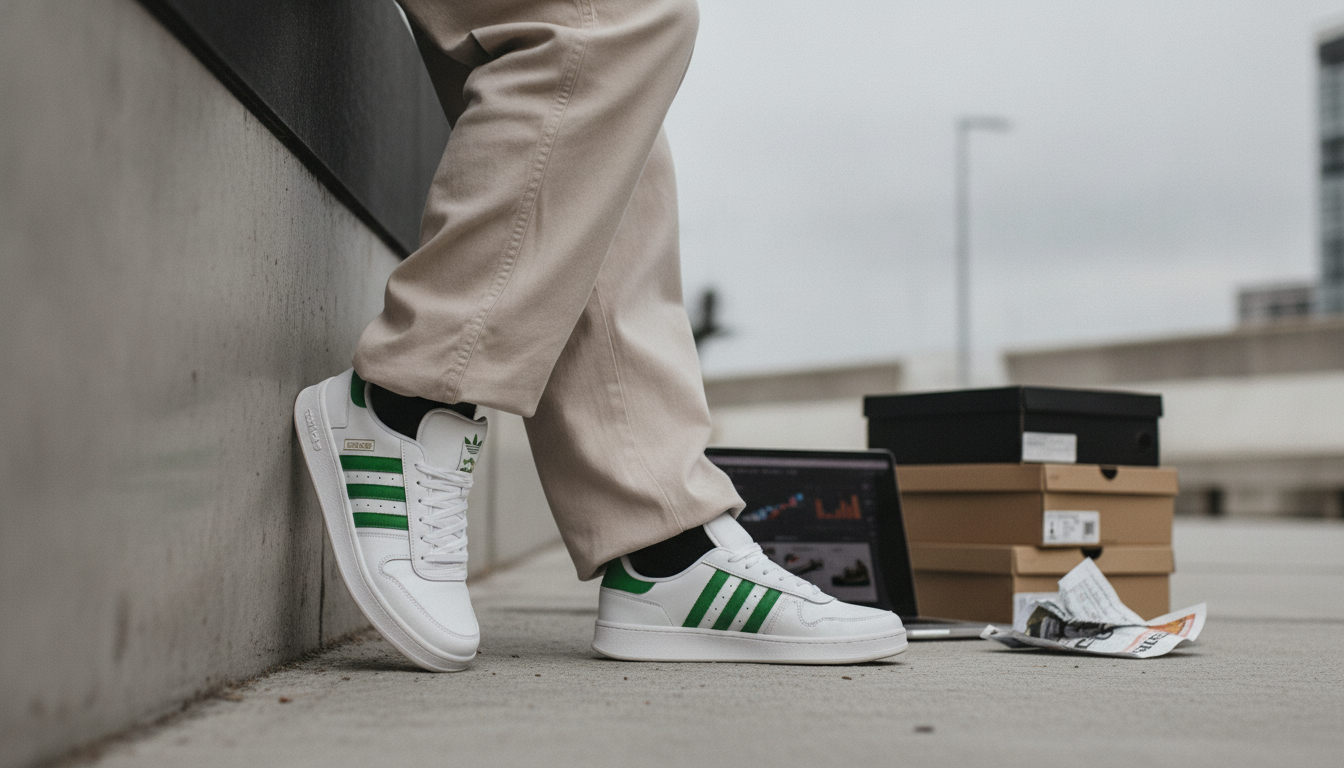
Adidas hype culture sits at the crossroads of sport, music, design, and online scarcity. Understanding how drops gain momentum, how prices move in the resale market, and how silhouettes cycle through “must-have” status helps collectors and casual wearers make smarter choices—whether the goal is daily wear, collecting, or trading. For more guidance, see The Impact of Sneaker Culture on Fashion Trends.
Adidas has a rare advantage in sneaker culture: the brand is instantly identifiable from across a street photo, a stage clip, or a quick scroll. That recognition turns certain pairs into shorthand for an era—and makes demand easier to spark when the timing is right. For further reading, see ‘Sneakerheads’: How culture, exclusivity define the resale value of ….
Most “hyped” Adidas pairs don’t appear out of nowhere. Demand usually builds from a blend of heritage trust and modern visibility—then a specific trigger (a collaboration, a style shift, or a comfort narrative) lights the fuse.
| Trigger | What changes | Typical buyer behavior |
|---|---|---|
| High-profile collaboration | Story + limited supply | Quick sellouts, higher early resale |
| Retro re-release | More availability, renewed styling | Broader buying; resale stabilizes |
| Celebrity/stylist push | Outfit repetition across media | Gradual demand rise; colorways move |
| Tech upgrade or comfort focus | Better wearability | Longer hold times; fewer quick flips |
Adidas trends tend to swing like a pendulum: slim and minimal, then chunkier and more vintage, then back again. If a model has a clean shape, easy colorways, and a recognizable identity, it’s more likely to resurface—especially when styling turns toward simplicity.
Scarcity alone doesn’t sustain hype; it just creates the first spike. What keeps attention (and resale interest) alive is a story that people can repeat: a material choice, an archive reference, or a collaborator’s identity that feels authentic.
For official release info and product context, start with adidas — Official Website. For market-wide pricing visibility, platforms like StockX and GOAT can help benchmark what buyers are actually paying.
Resale is less about “hype” in the abstract and more about signals: partner credibility, supply distribution, wearable design, and how quickly the market gets saturated with listings. Reading those signals can help avoid buying at the most expensive moment.
| Signal | Often means | Practical takeaway |
|---|---|---|
| Price spike day 1–3 | FOMO before deliveries arrive | Wait for post-delivery re-pricing if buying |
| Gradual rise over weeks | Sustained organic demand | Safer hold than instant spikes |
| Sharp drop after restock | Supply increased | Better entry point for personal wear |
| Stable price for months | Core classic demand | Lower risk for long-term rotation |
Sellouts usually come from a tight mix of limited supply, strong collaboration storytelling, and broad wearability. Wider allocations, less compelling colorways, or awkward timing can reduce urgency and leave pairs available longer.
Often within the first 7–14 days, after buyers receive pairs and the number of listings increases. Extremely limited collaborations can break the pattern, especially when supply stays low and demand remains steady.
Use marketplaces with authentication, keep purchase records, and scrutinize listing photos, labels, and seller history. Always confirm the return/dispute policy before buying, and avoid deals that pressure you to pay off-platform.












Leave a comment