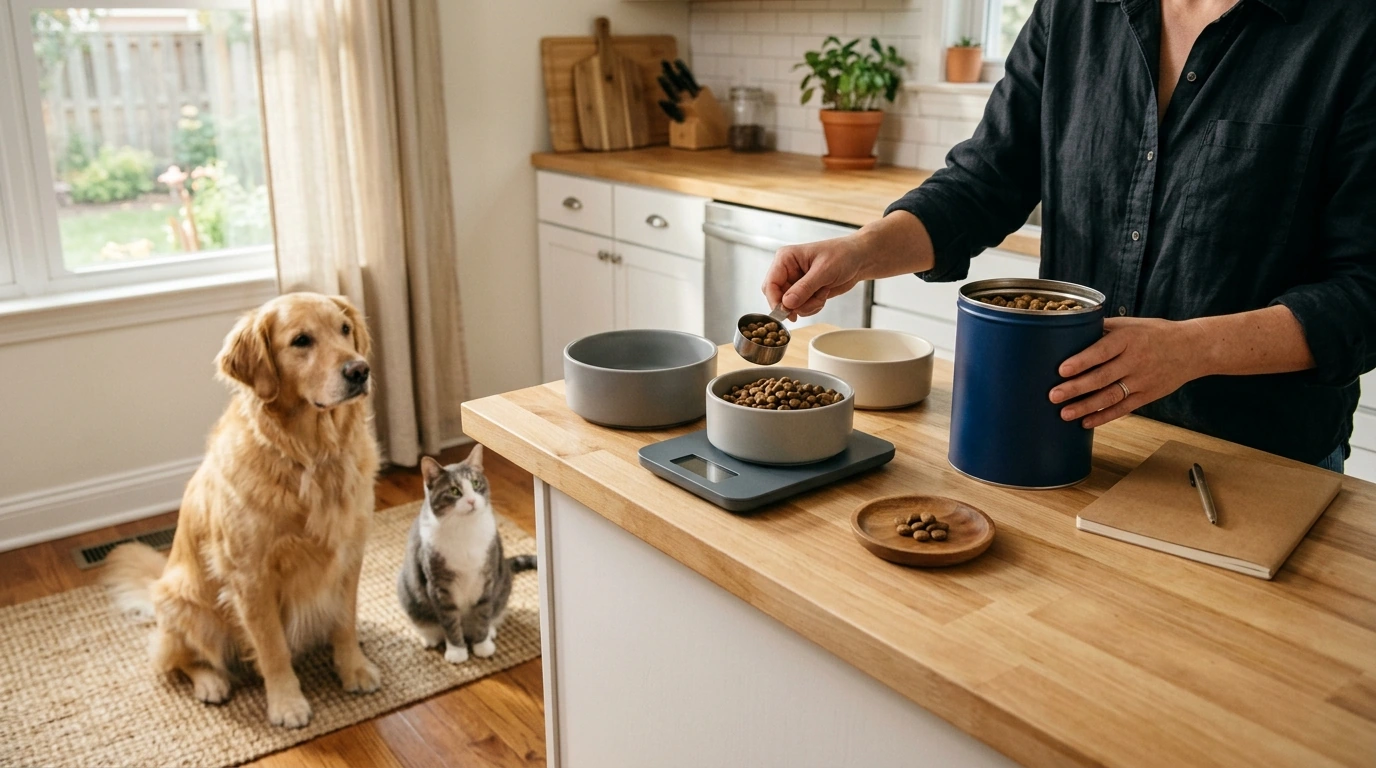
Portion control is one of the simplest ways to support a pet’s energy, mobility, digestion, and long-term comfort—yet it’s also one of the easiest things to misjudge. Dogs and cats often eat based on opportunity, habit, and reinforcement (especially treats), not true calorie needs. A consistent routine, accurate measuring, and a few behavior-friendly strategies can reduce overeating without turning mealtimes into a daily battle.
A high-quality food can still lead to weight gain if the daily amount runs just a little high. For many pets, changes on the scale come from a small surplus that repeats day after day, not a single “big meal.” That extra weight can increase strain on joints and reduce stamina; for cats, it can also raise risk around metabolic health. Guidance like the WSAVA Global Nutrition Guidelines emphasizes evaluating the whole diet and feeding plan—not just a label or ingredient list.
Portions affect more than body size. Oversized meals can worsen begging, scavenging, and stomach upset from rapid eating. When meals are consistent, pets learn the pattern: food arrives at predictable times, in predictable amounts, which can lower food anxiety and reduce nuisance behaviors around the kitchen.
These are common household patterns—not “bad owners.” The fix is usually a system that makes the right choice easier on busy days.
Start with a plan that’s hard to accidentally break. Most adult pets do well with two meals per day, though some do better with smaller, more frequent portions (especially cats, or pets that gulp food). If you want a quick way to organize meals, treats, and progress tracking, Healthy Portions Happy Pets: Pet Nutrition Guide (Digital Download) is a simple reference you can keep on your phone.
| Routine element | What to do | Why it helps |
|---|---|---|
| Meal schedule | Feed at the same times daily | Reduces grazing and anticipatory begging |
| Portion measurement | Weigh servings or use consistent measured tools | Prevents gradual overfeeding |
| Treat plan | Set a daily limit; subtract from meal calories/portion | Stops “invisible” calorie stacking |
| Household coordination | Use a log, magnet chart, or app reminder | Prevents accidental double meals |
| Slow feeding | Use puzzle feeders, slow bowls, or scatter feeding | Improves satiety and reduces gulping |
“Less food” doesn’t have to mean “a pet that acts starving all day.” The goal is a plan that improves satiety and lowers the opportunities to overeat.
If you need consistency when you’re away or your mornings are hectic, an automatic feeder can help enforce boundaries. The Automatic Pet Feeder with Tilted Double Bowls and Water Fountain can support regular timing and measured servings—especially useful in multi-person households where routines can drift.
Dogs and cats respond to routine differently, and their nutrition needs aren’t interchangeable.
Portion control works best when it’s paired with basic monitoring. The Association for Pet Obesity Prevention highlights how common excess weight is, which makes it especially important to catch small changes early. For medical context, the Merck Veterinary Manual is a trusted reference, but your veterinarian should guide any weight-loss plan.
Make changes gradually, use slow-feeding tools to extend mealtime, and shift calories from treats back into balanced meals. For cats especially, avoid rapid cuts and check with a veterinarian if appetite, behavior, or weight changes quickly.
It can work for a small number of pets with stable weight and low food motivation, but it often increases the risk of overeating and makes intake harder to track. Structured meals with monitoring usually make portion control simpler and more consistent.
Common clues include creeping weight gain, constant begging, fast eating, reduced stamina, and difficulty feeling ribs or seeing a defined waistline. If changes are sudden or paired with vomiting, diarrhea, or thirst changes, involve a veterinarian.








Leave a comment