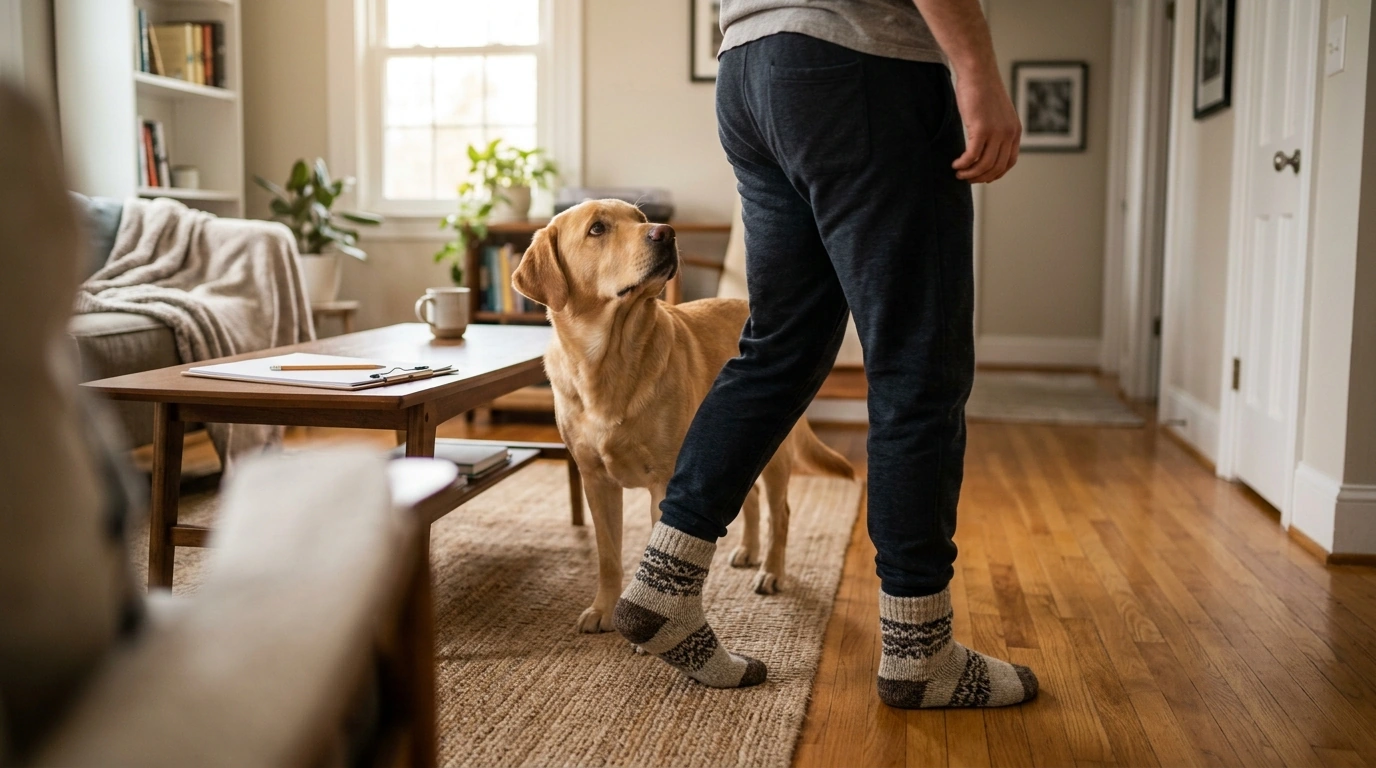
Some dogs simply like to stay within a few feet of their person. Others track every step between rooms, wait outside bathroom doors, or pop up the moment you stand—then nudge your leg as if to say, “Where are we going?” Those details matter because “following” can mean very different things depending on the dog’s emotional state and what happens next.
For many dogs, shadowing is healthy social bonding—especially in adolescent dogs, recently adopted dogs, and breeds developed to work closely with people. It becomes more concerning when it shows up with panic, destructive behavior, excessive vocalizing, or an inability to settle unless the dog is physically touching you. Context also changes the picture: time of day, exercise levels, household stress, recent routine changes, and even subtle medical discomfort can all increase clinginess.
Before assuming it’s “separation anxiety,” start with the easiest explanations. Is your dog asking for a bathroom break, food, water, a cooler spot to lie down, or relief from discomfort? Dogs don’t always show needs in obvious ways, and following is an efficient way to get your attention.
Next, look for reinforcement: if “you move, the dog gets paid,” following becomes a strong habit. Talking, petting, opening a door, offering treats, or grabbing the leash can all unintentionally reward the behavior. Body language is the tie-breaker. A relaxed tail, soft eyes, and a loose posture often indicate companionship. Tense posture, pacing, panting, whining, and scanning the environment suggest anxiety.
Also track patterns and triggers. Keys, shoes, a work bag, a shower, or closing doors can predict what your dog expects next. If the dog follows only one person, that often reflects attachment patterns and a learning history with that individual (who feeds, plays, trains, or responds fastest).
| Clue | What it can mean | What to try next |
|---|---|---|
| Follows calmly, settles on a bed nearby | Normal companionship or routine | Reinforce calm settling; add predictable rest cues |
| Stares and blocks your path, nudges you repeatedly | Attention-seeking or learned habit | Reward calm; ignore pushy nudges; offer a chew or mat |
| Whines when you close a door, paws at it | Frustration or mild separation stress | Practice brief door-closed reps with treats; build duration slowly |
| Paces, pants, drools, tries to escape when you leave | Separation anxiety risk | Begin separation training plan; consult a vet/behavior professional |
| Follows more at night or after activity | Overtiredness, under-exercise, or need to decompress | Add sniff walks, food puzzles, and a calm bedtime routine |
| New clinginess plus stiffness, licking lips, reluctance to jump | Pain or medical discomfort | Schedule a vet check; track symptoms and timing |
Many “Velcro dog” moments are simply your dog choosing proximity to their safe person. Dogs are cooperative social animals, and staying near you can be calming and rewarding. It also becomes a routine: if following often leads to fun (walks, play, treats, car rides), the behavior strengthens over time.
Following crosses into “needs attention” territory when it’s powered by distress rather than preference. Separation-related distress may show up as frantic door-scratching, barking, drooling, or destruction when you step away or leave the home. The American Veterinary Medical Association provides a helpful overview of signs and next steps for separation anxiety: AVMA — Separation Anxiety in Dogs.
A sudden behavior change is a red flag, especially when paired with appetite changes, limping, restlessness, new accidents indoors, or sleep disruption. If you suspect separation anxiety, additional guidance from the ASPCA — Separation Anxiety and the Merck Veterinary Manual can help you recognize patterns worth addressing promptly.
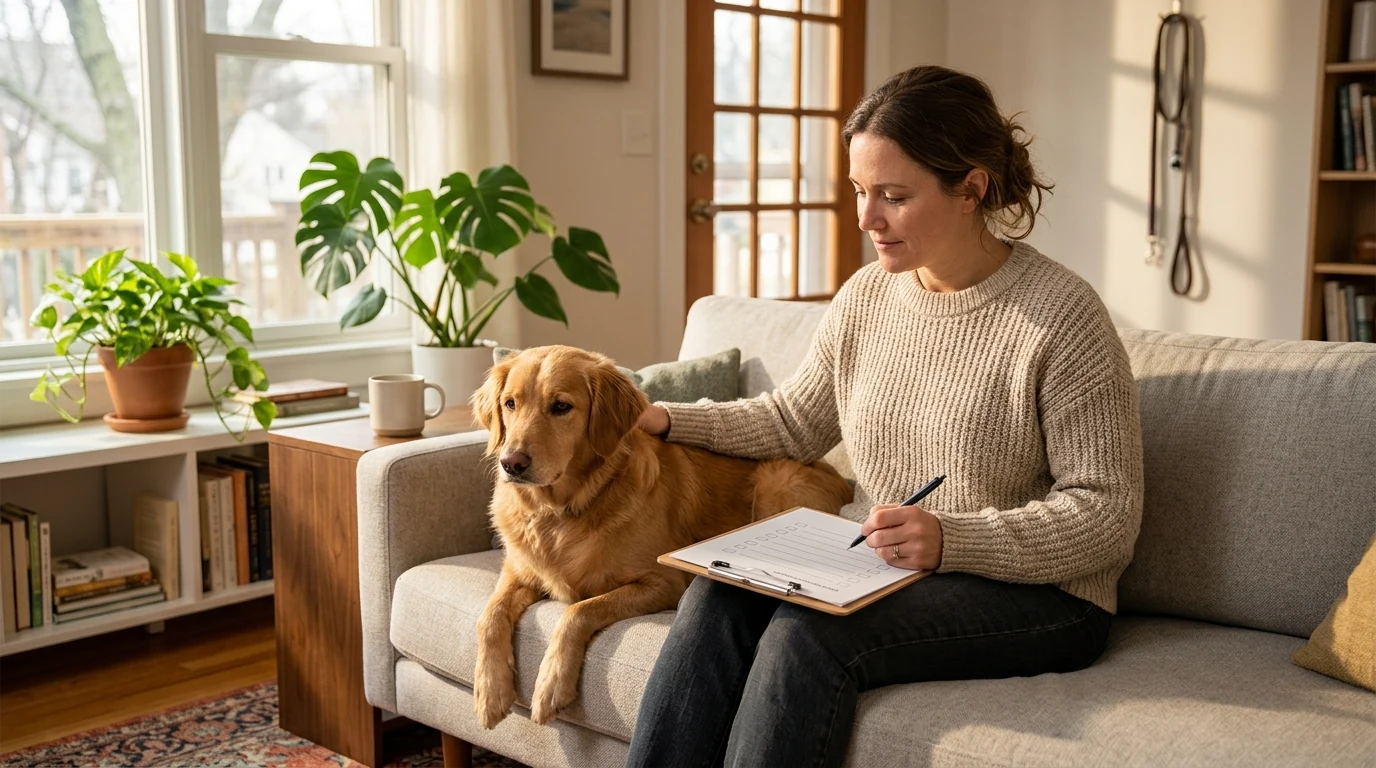
Supportive tools work best when they reinforce calm routines (not punishment). If you want an easy way to track triggers and progress, a printable guide can keep the plan consistent across family members: Why Your Dog Follows You Everywhere Checklist (digital download).
If your dog shadows you to “ask” for basics like meals or water, consistency can reduce that pressure. A set-it-and-forget-it setup can help some households keep timing predictable: Automatic Pet Feeder with Tilted Double Bowls and Water Fountain.
For small pets who get underfoot during errands or busy household moments, a secure option can help them feel included without constant tripping hazards: Portable Breathable Pet Backpack.
Yes—many dogs form a primary attachment based on who feeds, trains, plays, or responds most often. It’s typically normal unless it’s paired with distress, guarding behaviors, or an inability to settle when that person is out of sight.
Clingy behavior is usually calm and flexible: the dog can settle nearby and relax. Separation anxiety tends to include panic signs like pacing, panting, drooling, destruction, or escape attempts when separated, even briefly, and it often needs a gradual training plan (and professional help if severe).
A vet visit is a good idea when clinginess appears suddenly or comes with pain signals (stiffness, reluctance to jump), appetite or sleep changes, gastrointestinal upset, mobility issues, new indoor accidents, or senior cognitive changes. Tracking timing, triggers, and symptoms can help your vet narrow down the cause.









Leave a comment