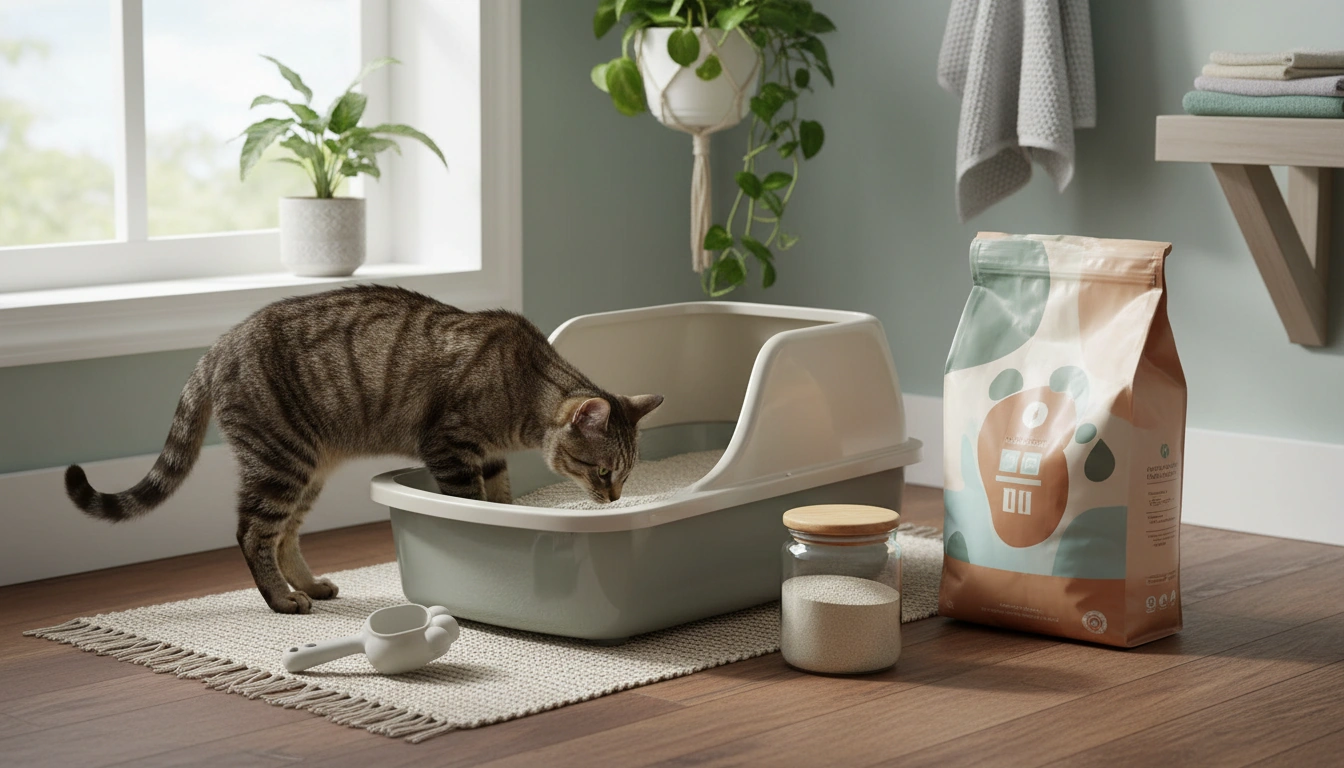
The healthiest cat litter is one that keeps dust and harsh chemicals to a minimum while still controlling odor and staying easy to clean. For most homes, that points to low-dust, unscented litters made from natural materials (like paper, wood, wheat, or corn) or a high-quality, low-tracking clay litter that’s proven to be low in silica dust.
Dust is a common irritant for cats and people, especially in small spaces or homes with asthma or allergies. Look for “low dust” or “99% dust-free” claims and avoid pouring from high up, which can kick particles into the air.
Strong fragrances can bother sensitive cats and may discourage consistent box use. Unscented litter typically reduces unnecessary exposure while still letting you notice changes in your cat’s urine or stool that could signal a health issue.
Paper and wood pellets tend to be gentle and low-tracking, while wheat or corn litters can clump well. The tradeoff is that some plant-based litters track more or may need more frequent top-offs depending on your cat’s habits and humidity levels.
Clumping litter can make daily removal faster, which helps keep ammonia odors down and supports a cleaner box. Non-clumping options (like many pellet styles) can still be healthy, but they often require more attentive spot-cleaning and periodic full changes.
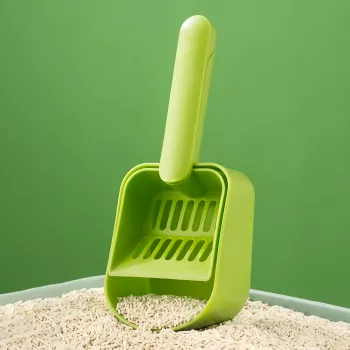
Even the “healthiest” litter can become unhealthy if it sits too long. Scoop at least once a day, keep the box in a well-ventilated area, and fully refresh on a schedule that matches your litter type. For a practical approach to faster, cleaner daily maintenance, see this guide to a self-cleaning cat litter scoop base for easy daily cleanup.
For clumping litter, a full change is often needed every 2–4 weeks if you scoop daily, while many pellet or non-clumping litters need more frequent full refreshes. If odor lingers after scooping or the litter stays damp, it’s time to replace it sooner.








Leave a comment