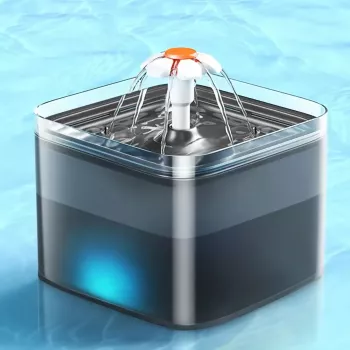
Cats often prefer moving water, and a fountain can make hydration easier to maintain day after day. An LED-lit design adds quick, at-a-glance visibility of water level and flow—helpful at night or in low-light rooms—while the circulating stream encourages more frequent sips. For many homes, that combination turns “Did they drink today?” into a simpler, more routine check.
A cat’s drinking habits can be surprisingly specific. Some will ignore a freshly filled bowl, then perk up the moment they hear a trickle. A fountain’s circulation keeps water moving, which can be more appealing than still water and may lead to more consistent drinking for many cats.
LED lighting is a practical upgrade because it improves visibility of the water line and makes it easier to notice when the reservoir needs a refill. That matters most in the evening—when room lights are off, a hallway is dim, or the fountain sits in a corner. The gentle flow also reduces the chance of water becoming stale compared with an untouched bowl, especially in warm rooms.
For general cat wellness guidance, reputable resources like the American Veterinary Medical Association (AVMA) cat care page and the Cornell Feline Health Center are helpful starting points.
Not all fountains feel the same to a cat—or to the humans who clean them. If you’re comparing options, these features tend to make daily use smoother:
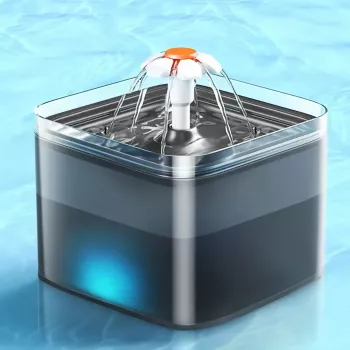
A dedicated fountain can act as a “water station” that’s easy to spot and easy to monitor. The LED Cat Water Fountain is designed to encourage drinking with circulating water and added LED visibility for quick checks. It’s a practical option for single-cat homes or multi-pet households that want a consistent place for fresh water.
For cleaner day-to-day use, many households find it helps to keep water and food a short distance apart. Pairing a separate feeding setup—like an Elevated Ceramic Cat Bowl—can reduce the odds that crumbs and splashes end up in the reservoir between refills.
| Feature | LED Water Fountain | Standard Water Bowl |
|---|---|---|
| Water movement | Continuous circulation can keep water from sitting still for long periods | No movement unless manually refreshed |
| Visibility at night | LED lighting can make level and flow easier to see | Depends on room lighting |
| Maintenance | Requires regular cleaning and filter checks | Requires rinsing and refilling; simpler but can get stale faster |
| Encourages drinking | Often more enticing for cats that prefer running water | May be ignored by cats that dislike still water |
Where the fountain lives can affect how much it gets used. A few small adjustments often make a noticeable difference:
Fountains are easiest to maintain when cleaning is light but consistent. A simple routine supports steady flow and keeps the water tasting fresh:
Plan on daily top-ups and a quick rinse for visible debris, plus a weekly deep clean that includes the pump area. If you have multiple pets, a dusty environment, or heavy shedding, you may need to clean and check the filter more often.
Many cats tolerate soft LED lighting well, especially when it’s indirect and not shining into resting areas. If your cat seems sensitive, place the fountain where the light is less noticeable or in a nearby low-traffic spot rather than right next to a sleeping space.
The most common causes are low water level, a clogged filter, hair caught in the pump, or mineral buildup from hard water. Refilling, cleaning the pump intake, and replacing the filter on schedule usually restores normal flow.










Leave a comment