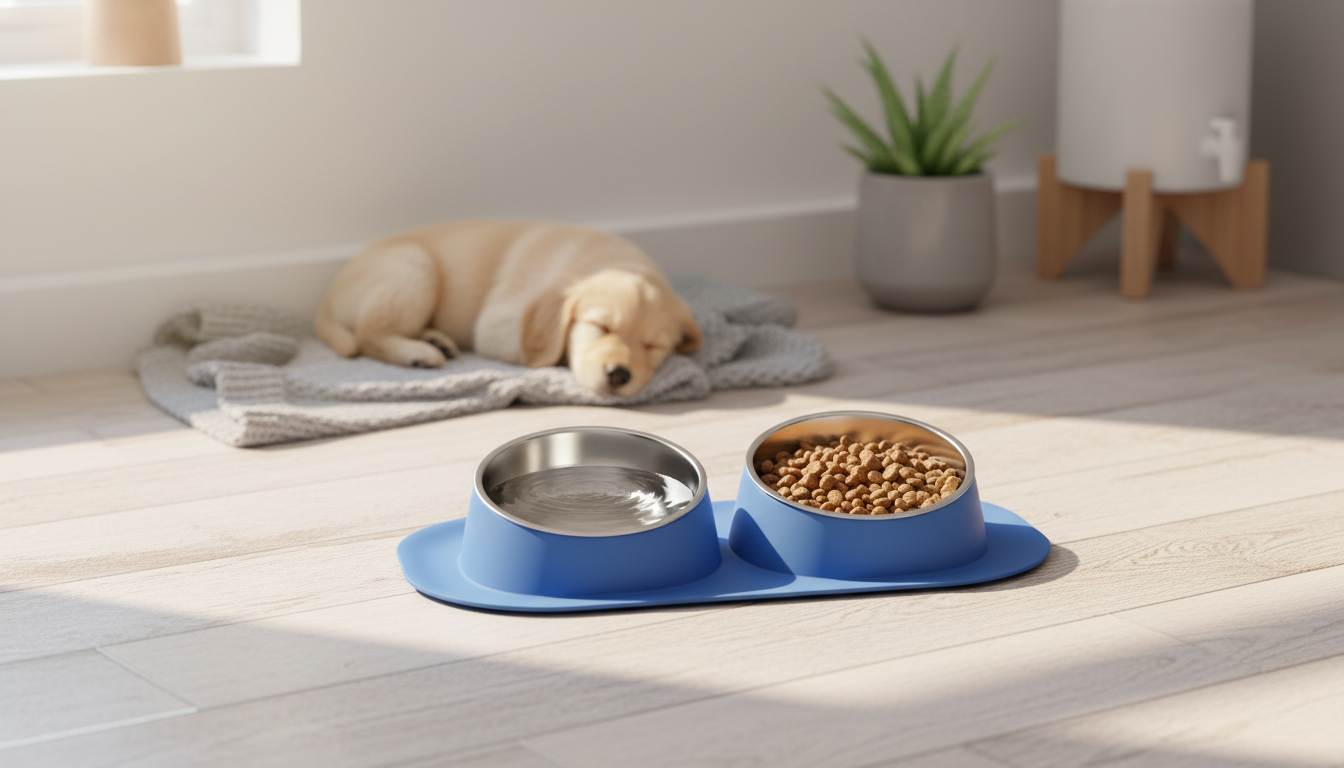
Mealtime is easier to manage when food and water stay put, bowls are simple to clean, and pets can eat in a comfortable posture. A tilted double-bowl setup combines daily practicality with a cleaner feeding area, making it useful for both cats and small-to-medium dogs—especially for pets that push bowls around or make a mess when they eat quickly.
A tilted, two-bowl station isn’t just a style upgrade—it can change how a pet approaches food and water. When the bowls sit at an angle, food is presented closer to the front of the bowl, which can make it easier for some pets to take bites without “chasing” kibble around the rim.
For many homes, the biggest day-to-day benefit is a more predictable feeding zone: bowls stay aligned, the footprint is consistent, and cleanup tends to be faster—especially on hard floors.
Material choice affects odor, durability, and how easy it is to keep bowls hygienic. Stainless steel is widely used because it’s non-porous, meaning it’s less likely to hold onto smells or residue over time. It also tends to handle frequent washing well.
| Material | Pros | Watch-outs |
|---|---|---|
| Stainless steel | Durable, odor-resistant, easy to clean | Choose quality steel; inspect for sharp seams |
| Plastic | Lightweight, inexpensive | Can scratch and hold odors; may trigger sensitivity in some pets |
| Ceramic | Heavy, stable, often dishwasher-safe | Can chip or crack if dropped; heavier to handle |
Even a great bowl can become a daily annoyance if it slides across the kitchen with every bite. A stable feeding station reduces skidding, which helps keep food where it belongs and can also limit water slosh and drips during enthusiastic drinking.
If spills are a recurring issue, placing the station on a flat, consistent surface (instead of partly on grout lines or uneven thresholds) can make a noticeable difference.
Cleaner bowls support a cleaner feeding routine. Food residue and water film can build up faster than expected, particularly with wet food or warm indoor temperatures. Regular washing also helps control odors and keeps the feeding area more pleasant for both pets and people.
For general pet food safety and handling habits, review guidance from the FDA on safe handling for pet food and treats.
| Pet type | What to prioritize | Practical tip |
|---|---|---|
| Cats | Comfortable bowl width, stable base, easy cleaning | Keep water slightly away from food if the cat prefers separation |
| Small dogs | No-slide base, enough depth for kibble/wet food | Use a mat underneath if the dog is a fast eater |
| Medium dogs | Stability and sturdier stand | Confirm the station won’t tip when the dog bumps it |
For broader nutrition and feeding guidance, the American Veterinary Medical Association (AVMA) and Cornell University’s feline nutrition basics are helpful references.
| Detail | Value |
|---|---|
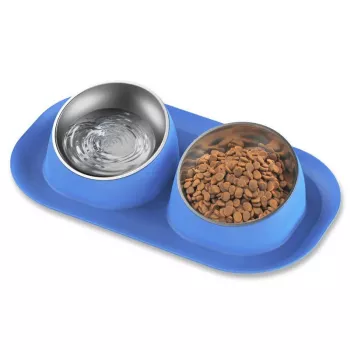
| Product | Stainless Steel Tilted Double Dog Bowl – Anti-Skid, No Spill, Removable Feeding Bowls for Cats and Dogs |
| Price | $18.97 USD |
| Availability | In stock |
| Use case | Food + water station for cats and dogs |
Yes—stainless steel is commonly used for pet feeding because it’s non-porous, durable, and typically easy to sanitize. Choose food-grade quality with smooth seams, and wash routinely to prevent residue buildup.
Removable inserts let you lift bowls out for washing or refilling while keeping the stand in place, which is especially helpful when bowls are full of water. It also makes it easier to wipe and dry the base area so moisture and grime don’t collect underneath.
A tilted bowl can improve comfort for some pets by bringing food closer to the mouth and reducing awkward bending, but results vary by size, eating style, and individual needs. Monitor posture and ease of eating, and switch setups if your pet seems uncomfortable.







Leave a comment