Cats scratch for good reasons: it conditions claws, stretches muscles, and helps them feel comfortable in their space. The downside is that the “perfect” scratching target is often a couch arm, a doorway, or the corner of a rug. A dedicated scratching surface redirects that energy to something appropriate, helping keep claws healthier while reducing wear on your home.
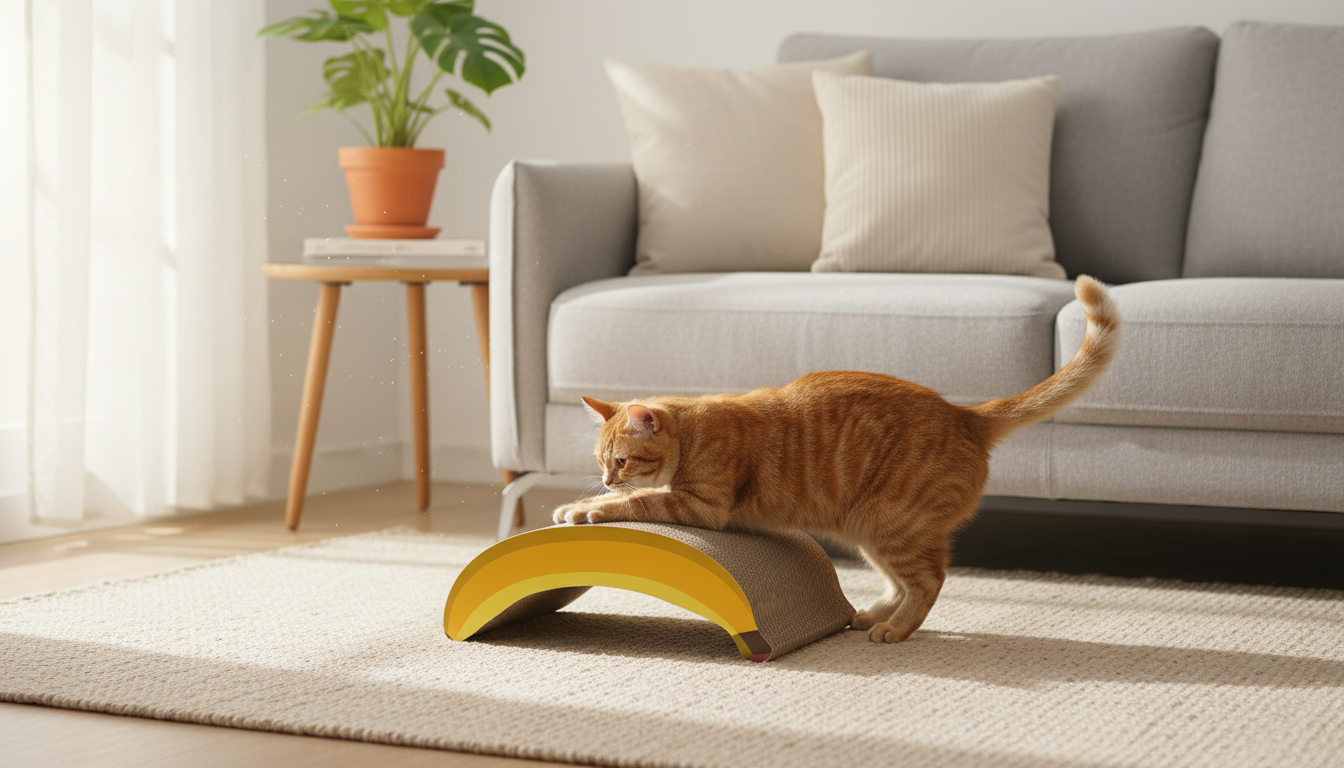
A banana-shaped scratching board adds a cheerful twist. Its curved silhouette can look more like décor (or a toy) than a bulky pet accessory, which makes it easier to place where your cat actually spends time—right where it can do the most good.
Why Cats Need a Dedicated Scratching Surface
- Claw maintenance: Scratching helps shed older outer nail layers, supporting normal claw condition and comfort.
- Stretching and mobility: Many cats scratch as a full-body stretch—shoulders, back, and paws all get involved—so it naturally fits into daily routines.
- Furniture protection: A consistent, rewarding “scratch zone” reduces the odds that cats choose furniture, doorframes, or carpets instead.
- Stress and boredom relief: Some cats scratch more when bored or unsettled; an appealing scratcher provides a safer outlet for that impulse.
Behavior experts emphasize that scratching is normal (not “bad behavior”). Resources like the ASPCA’s guide to scratching and International Cat Care’s scratching advice highlight redirecting the behavior with appropriate surfaces rather than trying to stop it entirely.
What Makes a Banana-Shaped Scratching Board Different
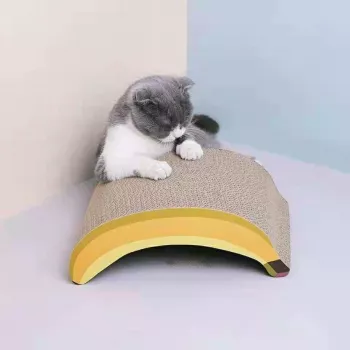
- Curved, cat-friendly shape: The contour can support multiple positions—scratching, lounging, and side rubs—so it earns attention beyond a quick claw session.
- Novel styling: A bright banana theme can make the scratcher feel like a fun object instead of “another pet item,” which may help some cats investigate sooner.
- Small-space friendly: A compact footprint fits beside a sofa or in an apartment without dominating the room.
- Different feel than flat boards: Cats that ignore flat scratch pads sometimes respond better to contoured surfaces that encourage bracing and stretching.
Quick Product Snapshot
If you’re looking for a playful scratch-and-rest spot, the Banana Shaped Cat Scratching Board is designed to be both inviting and easy to place near common scratch targets. It can also be used as a gradual redirect tool: start it beside the item being scratched, then shift it a few feet at a time to your preferred location once your cat is using it consistently.
Where to Place It for Best Results
- Put it where scratching already happens: Set it right next to the sofa arm, doorway, or rug edge your cat prefers. The goal is to make the “right” option the easiest option.
- Try rest-and-wake zones: Many cats scratch after waking up. Placing the board near a favorite nap spot can catch that natural routine.
- Keep it stable: A scratcher that slides or wobbles can be ignored. Place it on a flat surface; if needed, use a non-slip mat underneath.
- Start quiet for shy cats: A low-traffic corner can feel safer at first. Once it becomes part of the routine, you can relocate it gradually.
How to Encourage a Cat to Use a New Scratcher
- Add a scent cue: Sprinkle a little catnip (if your cat responds) or a pinch of silvervine on the scratching surface to spark interest.
- Reward the moment: Offer a small treat or calm praise immediately after your cat scratches the board. Quick timing helps the association stick.
- Avoid forcing contact: Pushing paws onto the surface can backfire and create aversion. Let curiosity do the work.
- Make furniture less rewarding temporarily: If couch scratching continues, cover the spot with a blanket, use furniture-safe tape, or block access while the scratcher sits right beside it.
For households exploring claw-management alternatives, the AVMA’s declawing policy discusses why providing appropriate scratching outlets is an important part of living comfortably with cats and their instincts.
Care, Longevity, and When to Replace
- Rotate for even wear: Turn the board occasionally so your cat doesn’t dig a single “trench” in one area.
- Keep the area tidy: Vacuum or shake off loose debris around the scratch zone so it stays appealing.
- Replace when it’s spent: If the surface is heavily frayed, flattened, or no longer satisfying, cats may drift back to furniture. A fresh scratch texture can restore interest quickly.
- Consider a second scratch option: Multi-cat homes (or a high-energy scratcher) often do better with more than one scratch station to prevent guarding and bottlenecks.
Pairing Ideas for a More Engaging Cat Corner
FAQ
Will a curved scratching board work for cats that prefer vertical scratching?
It can, but preferences vary by cat. If your cat strongly favors vertical scratching, consider offering both styles and place the curved board near the current scratch target to see whether your cat uses the curve for stretching and clawing.
How long does a scratching board typically last?
It depends on scratching intensity, the number of cats, and how dense the material is. Replace it when it’s heavily frayed or flattened, loses structure, or your cat’s interest drops and furniture scratching starts to return.
Is catnip necessary to get a cat to use a new scratcher?
No—catnip is optional. Many cats will use a scratcher with good placement, a little play nearby, and quick rewards right after they scratch, which builds a strong positive habit.
Recommended for you








Leave a comment