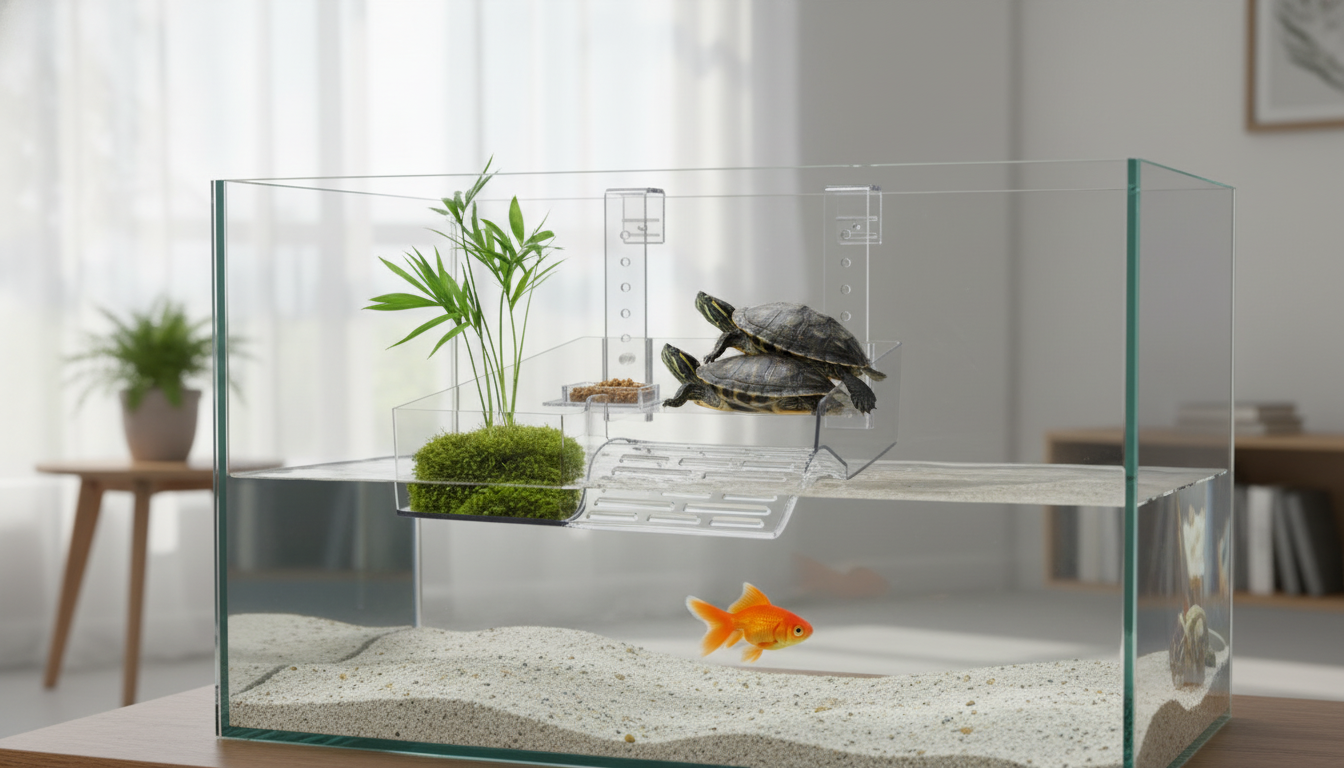
A wall-mounted basking platform adds a stable, elevated resting spot that keeps floor space open for swimming, roaming, and enrichment. With the right placement and lighting, it supports natural thermoregulation while creating a cleaner, more organized habitat layout.
Elevating the basking area changes how an enclosure functions day to day. Instead of placing a dock or rock pile on the substrate (where it can get wet, dirty, and crowded), a wall-mounted surface creates a dedicated “dry zone” that’s easier to keep consistent and easier for many reptiles to choose throughout the day.
If you’re upgrading an existing setup, a dedicated Wall-Mounted Basking Platform can be an efficient way to add vertical structure without redesigning the whole habitat.
Placement matters as much as the platform itself. The goal is simple: easy access, safe heating distance, and a reliably dry surface (especially in semi-aquatic habitats).
| Item to Check | Target | Quick Test |
|---|---|---|
| Access route | Easy climb | Animal can reach the surface without jumping |
| Heat distance | Warm but safe | Surface warms gradually; no scorching hot spots |
| UVB coverage (if used) | Within effective range | Platform sits in the intended UVB/heat zone, not in deep shade |
| Waterline clearance | Dry resting area | Surface stays dry after normal splashing |
| Stability | No wobble | Push gently; mounts hold firm without shifting |
| Headroom to lid/lamps | No contact hazard | Animal can’t touch fixtures when fully extended |
A secure mount starts with surface prep. Glass and acrylic often develop a thin film from humidity, hard water, and routine splashes—exactly what can prevent suction-style or adhesive-style mounts from gripping reliably.
For semi-aquatic turtles, newts, or similar setups, consider how water movement affects the wall: filter output can create constant micro-splashing that slowly undermines grip over time. A slight shift in filter direction can make a big difference.
A basking platform works best when it’s part of a clear temperature gradient. The basking surface should offer a warmer option than the cool side, while the rest of the habitat still provides shade, hides, and lower-temperature zones.
General care guidance from veterinary and welfare organizations can help you align heating/UVB routines with species needs, including resources from the AVMA, the Association of Reptilian and Amphibian Veterinarians (ARAV), and the RSPCA.
Even when temperatures are perfect, reptiles may avoid a platform if it feels slippery, exposed, or awkward to reach. Small adjustments can improve confidence and reduce stress behaviors.
For habitats where you’re balancing land and water use, pairing a stable dock with a small, separate tank used for short-term observation or transport can simplify routines. If you maintain multiple aquatic or semi-aquatic enclosures, a compact Desktop Betta Fish Tank may be useful as an extra holding option for certain non-reptile aquatic needs (always match housing to the animal’s requirements and husbandry plan).
Set it high enough to stay dry and create a warm zone, but low enough for an easy climb. Confirm your reptile can reach it without jumping and that there’s safe clearance from the lid and any heat fixtures.
Yes, as long as distance and temperature are controlled. Check the surface with an infrared thermometer, keep adequate headroom to prevent contact with fixtures, and use a thermostat/controller when appropriate.
Spot-clean whenever you see waste, shed, or stuck food, and do a deeper clean during regular habitat maintenance. Rinse thoroughly after using reptile-safe cleaning methods to avoid irritating residues.










Leave a comment