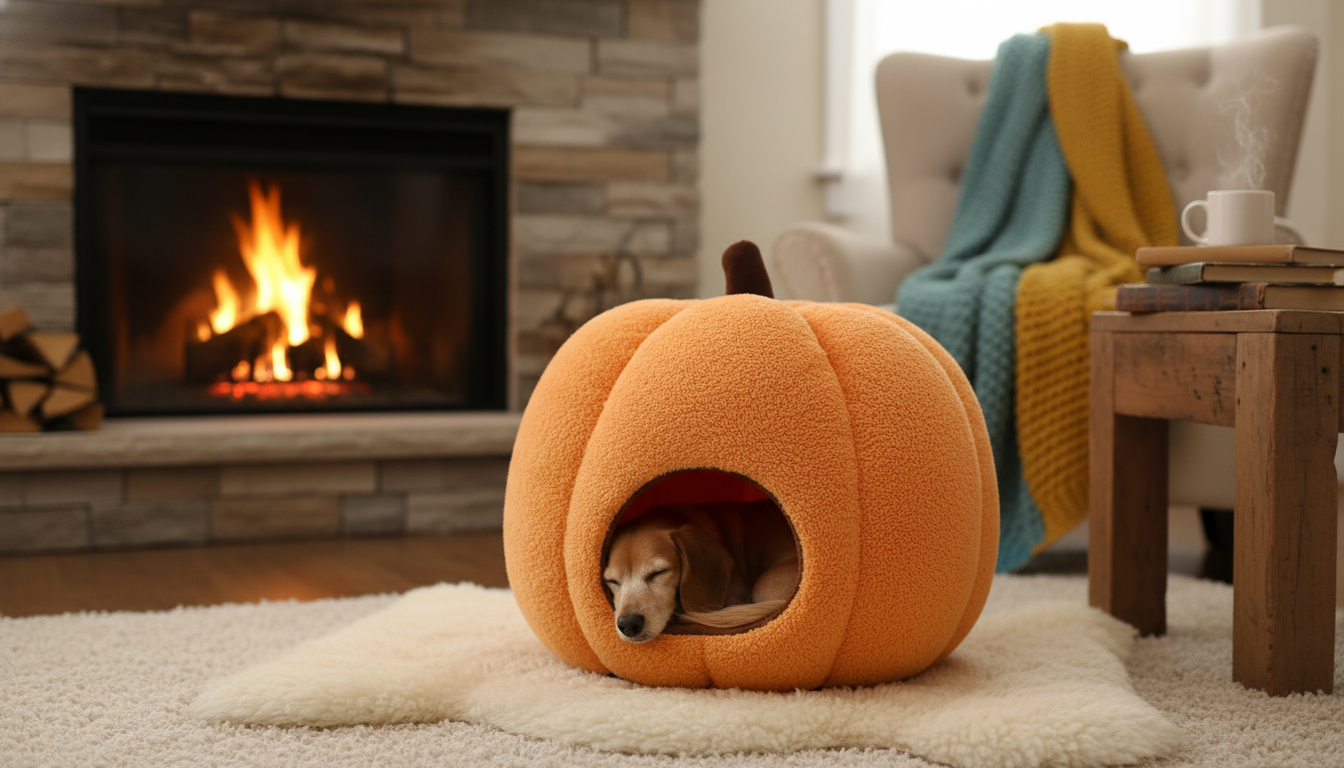
A warm, enclosed bed can make a big difference for dogs that seek burrow-style comfort during cold weather. A pumpkin-shaped winter dog bed is designed to feel like a snug little den—helping pets relax, settle faster, and stay comfortable on drafty floors. With raised walls and a defined entry, it offers a cozy “cave” vibe without taking up much space, making it a practical cold-season upgrade for many homes.
What makes a pumpkin-shaped winter bed different
Unlike flat mats or open bolsters, a pumpkin-shaped bed leans into the natural “nesting” behaviors many dogs show when they paw, circle, and tuck themselves in before resting.
- Cave-like shape encourages nesting: Great for dogs that like to burrow under blankets or wedge themselves between cushions.
- Raised sides create a windbreak effect: The walls help block light drafts and can also provide head and neck support during naps.
- Seasonal pumpkin design adds personality: The playful look doesn’t have to be temporary—many pets keep using this style year-round.
- A defined entry can feel reassuring: Some dogs settle faster when there’s a clear “doorway” and a boundary around them, rather than a fully open surface.
Who benefits most from a warmer, enclosed bed
Enclosed beds aren’t just cute—they can be a comfort tool for dogs that crave warmth and a sense of shelter indoors.
- Small breeds and short-haired dogs: They often chill faster in air-conditioned homes or on tile and hardwood.
- Senior dogs: Many older pets prefer a cushioned base plus gentle side support that helps them rest without constantly repositioning.
- Anxious or easily startled pets: Covered or semi-covered spaces can reduce environmental stimulation and help them unwind.
- “Nesters” that circle and dig: A den-style bed can give that satisfying tucked-in feeling without needing extra blankets everywhere.
For general cold-weather wellbeing guidance, it helps to review seasonal safety basics from the ASPCA and the American Kennel Club.
Key comfort features to look for
Not all cave beds feel the same. Paying attention to a few build details can make the difference between a “cute bed” and the bed your dog actually chooses at nap time.
- Soft interior lining: A plush lining feels warmer against paws and belly and encourages longer, deeper rest.
- Supportive base thickness: A thicker cushion can reduce pressure on elbows and hips, especially on hard floors.
- Stable shape: The sides should stay upright instead of collapsing when your dog leans in or rests their head on the edge.
- Non-slip placement strategy: A grippy underside helps, but placing the bed on a low-pile rug can also reduce sliding.
- Easy-care materials: Spot-cleanable surfaces and removable components (when available) make it much easier to keep the bed fresh.
Quick comfort checklist
| Feature |
Why it matters |
What to check |
| Enclosed sides |
Helps retain warmth and creates a den feel |
Sides stay upright; entry isn’t too tight |
| Cushioned base |
Improves rest quality and joint comfort |
Even fill; doesn’t flatten quickly |
| Soft lining |
Encourages longer naps and cozy nesting |
No scratchy seams; plush feel |
| Stable bottom |
Reduces sliding and repositioning |
Grippy base or place on a rug |
Sizing and fit: getting the “snug, not cramped” feel
The goal with a den-style bed is a secure curl-up space—without making it hard to enter, turn around, or settle comfortably.
- Measure how your dog actually sleeps: If your dog typically curls into a tight “donut,” measure that curled position (nose-to-tail curve) to estimate the interior space needed.
- Between sizes? Go larger for dogs that sprawl or have thicker coats; go smaller for true curlers that seek a tighter den feel.
- Check entry height for easy access: A lower, more open entry can be friendlier for seniors or short-legged breeds, reducing the effort to step inside.
- Offer options if your dog varies: Some dogs alternate between “cave naps” and full-body stretches—placing an open mat nearby can give them a choice.
Placement tips for colder months
Where the bed sits matters just as much as how it’s built—especially during winter when drafts and cold floors can undo the cozy factor.
Care, cleaning, and durability
Product snapshot
FAQ
Is an enclosed dog bed safe for overnight sleep?
Generally yes for healthy dogs as long as the entry stays open and your dog can leave freely. Avoid enclosed beds for pets with breathing issues or overheating concerns, and keep the bed away from heaters.
How do you get a dog to use a new cave-style bed?
Place it in a familiar, quiet spot and add a blanket with a familiar scent. Reward calm investigation and give it a few days of low-pressure exposure rather than forcing your dog inside.
What size should be chosen if a dog is between sizes?
Choose the larger option for dogs that sprawl out or have thicker coats, and choose the smaller option for dogs that truly curl up and prefer a snug den. Also confirm the entry height is easy for your dog to step into comfortably.
Recommended for you









Leave a comment