HomeBlogBlogElectric Rotating Butterfly Cat Toy: Play, Safety & Tips

Electric Rotating Butterfly Cat Toy: Play, Safety & Tips

Electric Rotating Butterfly Cat Toy: Play, Safety & Tips

Electric Rotating Butterfly Cat Toy: Interactive Play for Curious Cats

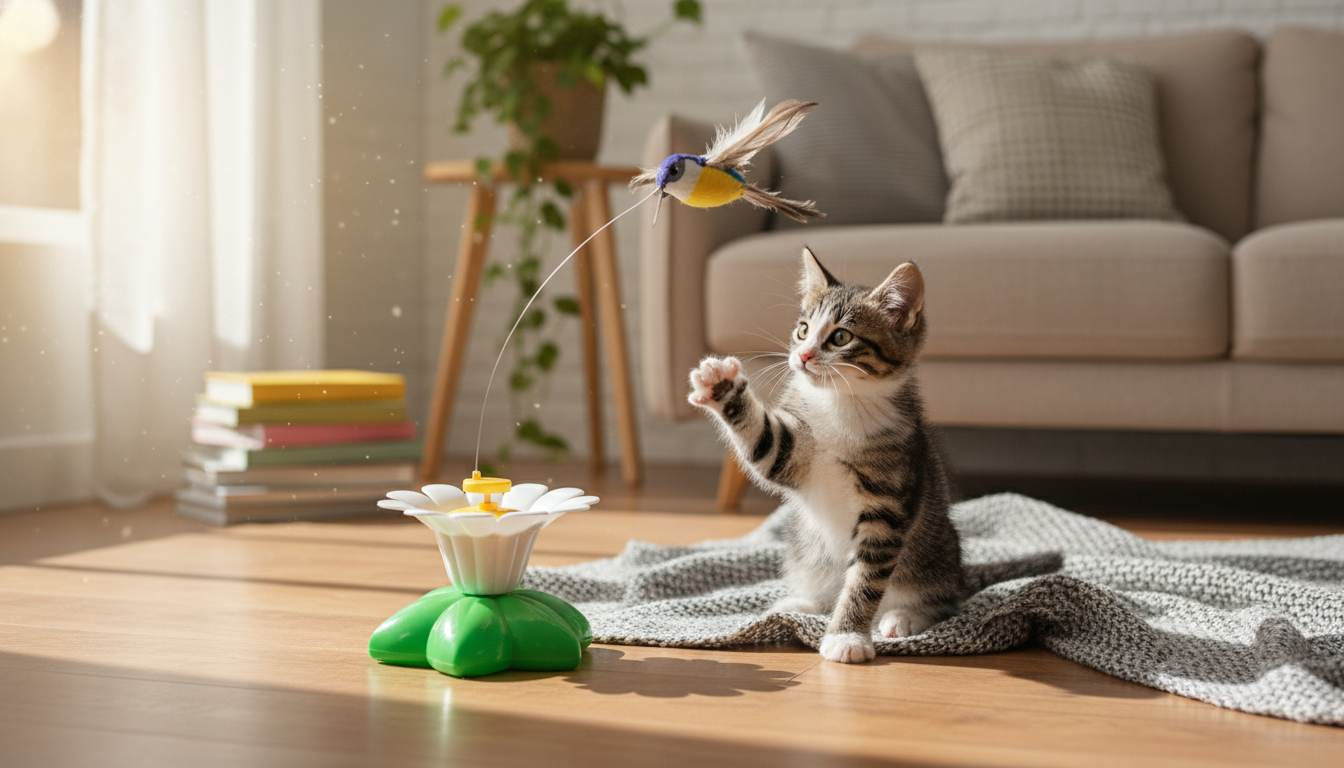
High-energy cats thrive on movement that feels unpredictable and “alive.” An electric rotating butterfly toy brings fluttering action down to floor level in a way that can keep indoor cats engaged, encourage healthy exercise, and reduce boredom-related behaviors. With the right setup and a few simple routine tweaks, this type of interactive toy can become a dependable outlet for pouncing, stalking, and batting—without requiring you to hold a wand every time your cat gets the zoomies.

What Makes a Rotating Butterfly Toy So Engaging

Cats are wired to notice quick, irregular motion. A rotating butterfly lure taps into that instinct by mimicking prey-like fluttering—rapid vibrations, sudden “escapes,” and small direction shifts that invite a chase response.

  • Mimics prey movement: The fast flutter and constant motion often trigger stalking, pouncing, and batting behaviors.
  • Channels indoor energy: Especially helpful for indoor-only cats that don’t have outdoor hunting outlets or large climbing spaces.
  • Supports enrichment routines: Short play bursts throughout the day can improve mood and reduce restlessness.
  • Encourages independent play: Useful when you can’t run a human-led session, though first uses should still be supervised.

If your cat tends to “hunt” shadows, insects near windows, or anything that skitters across the floor, a rotating butterfly toy usually lands in the sweet spot between entertaining and satisfying.

How the Electric Rotating Butterfly Cat Toy Works

An electric rotating butterfly cat toy typically has a motorized base that spins an arm or attachment holding a butterfly-like lure. The lure flutters as it moves, creating a continuous, attention-grabbing target at ground level.

  • Natural play cycles: Many cats follow a repeating pattern—watch → stalk → pounce → bat → reset—until they tire out or lose interest.
  • Placement matters: Use a flat, open patch of floor so your cat can circle and pounce without crashing into sharp furniture edges or slipping.
  • Gradual introductions help: For cautious cats, start with a short session so they can observe from a distance and approach on their own terms.

For cats that startle easily, it can help to place the toy nearby while it’s turned off first. Once it becomes a “safe object” in the room, running it briefly at a distance often builds confidence faster.

Everyday Benefits: Exercise, Focus, and Boredom Relief

When used in short, predictable sessions, rotating toys can become a practical part of your daily cat-care rhythm—especially in smaller homes or during bad weather when indoor pets get less stimulation.

  • Physical activity: Encourages quick bursts of movement that complement scratching posts and climbing routines.
  • Mental stimulation: Tracking fast motion keeps attention engaged, particularly for cats that ignore static toys after a day or two.
  • Multi-cat enrichment: Can provide a shared “target,” but monitoring is important to prevent swatting conflicts or resource guarding.
  • Pairs well with structured play: Start engagement with the rotating lure, then finish with a wand or toss toy so your cat gets a satisfying “catch” moment and cooldown.

For more on indoor enrichment and environmental needs, see the AAFP/ISFM consensus guidelines and the ASPCA’s cat care resources.

Safety and Setup Tips

Most rotating butterfly toys are simple to use, but a little planning makes play safer and helps the toy last longer.

  • Supervise the first sessions: Some cats try to bite the lure, tug the attachment, or flip the base. Make sure it stays stable and intact.
  • Inspect for wear: Stop use if you notice tearing, loose threads, cracked plastic, or sharp edges on the lure/arm.
  • Choose a clear zone: Keep it away from cords, dangling fabrics, or tight corners where a cat could wedge themselves while pouncing.
  • Keep sessions short: Aim for 5–15 minutes to avoid overstimulation and preserve novelty.
  • Support sensitive cats: If the motor sound or motion is startling, begin with the toy off, then run it briefly and reward calm observation.

Comparing Play Styles: Rotating Butterfly vs Other Cat Toys

Quick Comparison of Enrichment Options

Toy type Best for Typical play pattern Notes
Electric rotating butterfly Chasing, pouncing, stalking Burst movement + tracking Great for high-energy indoor cats; supervise early use
Chew toy with catnip and bells Gnawing, grabbing, self-soothing Carry + chew + kick Useful for independent play; catnip sensitivity varies
Water fountain Hydration and routine interest Short visits across the day Not a “play” toy, but strong daily enrichment
Traditional wand toy Bonding and controlled exercise Interactive hunt sequence Best when a person can lead and end with a reward

Keeping Interest High: Simple Ways to Refresh Play

When This Toy Is a Good Fit (and When It Isn’t)

Shop Interactive Cat Favorites

  • Electric Rotating Butterfly Cat Toy — a fast-motion lure that encourages stalking and pouncing.
  • Interactive Cat Chew Toy with Bells & Catnip — ideal for cats that like to gnaw, carry, or bunny-kick.
  • LED Cat Water Fountain — supports hydration and adds a daily point of interest beyond play.

Compare related options such as Transparent Cat Muzzle to match features, dimensions, and use case before choosing.

FAQ

How long should a cat play with a rotating butterfly toy each day?

Most cats do best with short sessions of about 5–15 minutes once or twice daily. End the session if you notice overstimulation such as panting, tail lashing, or agitation, and aim to finish on a calmer note.

Is it safe to leave an electric rotating toy running unattended?

Supervise early sessions to see whether your cat bites, pulls, or tries to flip the toy. Unattended use depends on the toy’s stability and your cat’s habits, and it’s safest to turn it off if you notice chewing or damage.

Why does a cat lose interest after a few days?

Cats often lose interest once the motion becomes predictable. Keep sessions short, move the toy to a new location, rotate it with other toy types, and pair play with a small reward to help rebuild excitement.

Was this article helpful?

Yes No
Leave a comment
Top

Shopping cart

×