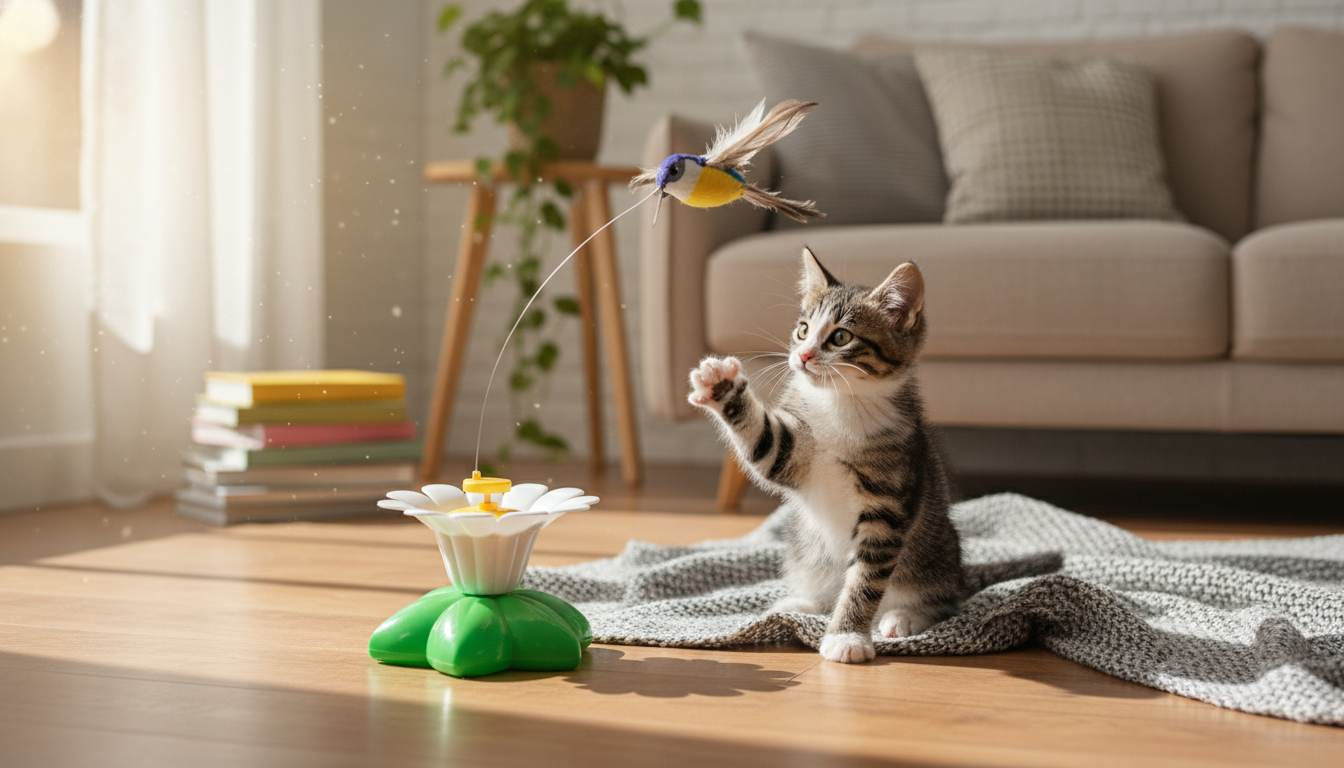
High-energy cats thrive on movement that feels unpredictable and “alive.” An electric rotating butterfly toy brings fluttering action down to floor level in a way that can keep indoor cats engaged, encourage healthy exercise, and reduce boredom-related behaviors. With the right setup and a few simple routine tweaks, this type of interactive toy can become a dependable outlet for pouncing, stalking, and batting—without requiring you to hold a wand every time your cat gets the zoomies.
Cats are wired to notice quick, irregular motion. A rotating butterfly lure taps into that instinct by mimicking prey-like fluttering—rapid vibrations, sudden “escapes,” and small direction shifts that invite a chase response.
If your cat tends to “hunt” shadows, insects near windows, or anything that skitters across the floor, a rotating butterfly toy usually lands in the sweet spot between entertaining and satisfying.
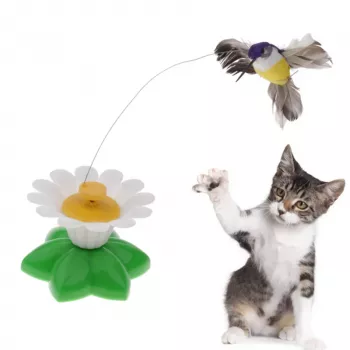
An electric rotating butterfly cat toy typically has a motorized base that spins an arm or attachment holding a butterfly-like lure. The lure flutters as it moves, creating a continuous, attention-grabbing target at ground level.
For cats that startle easily, it can help to place the toy nearby while it’s turned off first. Once it becomes a “safe object” in the room, running it briefly at a distance often builds confidence faster.
When used in short, predictable sessions, rotating toys can become a practical part of your daily cat-care rhythm—especially in smaller homes or during bad weather when indoor pets get less stimulation.
For more on indoor enrichment and environmental needs, see the AAFP/ISFM consensus guidelines and the ASPCA’s cat care resources.
Most rotating butterfly toys are simple to use, but a little planning makes play safer and helps the toy last longer.
| Toy type | Best for | Typical play pattern | Notes |
|---|---|---|---|
| Electric rotating butterfly | Chasing, pouncing, stalking | Burst movement + tracking | Great for high-energy indoor cats; supervise early use |
| Chew toy with catnip and bells | Gnawing, grabbing, self-soothing | Carry + chew + kick | Useful for independent play; catnip sensitivity varies |
| Water fountain | Hydration and routine interest | Short visits across the day | Not a “play” toy, but strong daily enrichment |
| Traditional wand toy | Bonding and controlled exercise | Interactive hunt sequence | Best when a person can lead and end with a reward |
Compare related options such as Transparent Cat Muzzle to match features, dimensions, and use case before choosing.
Most cats do best with short sessions of about 5–15 minutes once or twice daily. End the session if you notice overstimulation such as panting, tail lashing, or agitation, and aim to finish on a calmer note.
Supervise early sessions to see whether your cat bites, pulls, or tries to flip the toy. Unattended use depends on the toy’s stability and your cat’s habits, and it’s safest to turn it off if you notice chewing or damage.
Cats often lose interest once the motion becomes predictable. Keep sessions short, move the toy to a new location, rotate it with other toy types, and pair play with a small reward to help rebuild excitement.








Leave a comment