
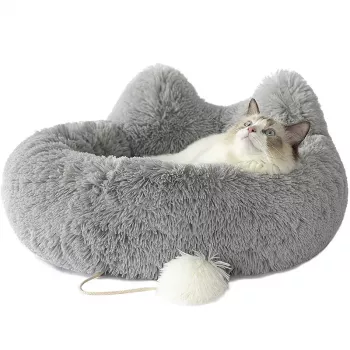
Calming cat beds can work for many cats, especially those that seek cozy, enclosed spaces or like to knead and curl into a tight ball. The best ones mimic the “nest” feeling cats naturally gravitate toward by offering plush, high-pile fabric and raised edges that give gentle, steady contact around the body. That constant, soft pressure can help some cats settle faster and stay asleep longer, particularly in new homes, busy households, or during routine stressors like visitors and thunderstorms.
A calming bed is most effective as a comfort tool, not a cure. It may reduce restlessness, encourage more time spent in a safe spot, and support relaxation when paired with a predictable environment. It won’t resolve severe anxiety on its own, and it can’t replace veterinary guidance if a cat is showing signs like hiding all day, inappropriate elimination, aggression, or overgrooming.
Look for your cat choosing the bed voluntarily, kneading, purring, slow blinking, or adopting a relaxed loaf/curl posture. Many cats also use the raised rim as a chin rest—an easy indicator they feel secure.
Some cats dislike fluffy textures, prefer cool flat surfaces, or want open sightlines. If the bed has a strong factory odor, slides on the floor, or is placed in a high-traffic area, even a “calming” design can be ignored.
Place the bed where your cat already naps, ideally in a quiet corner with a view of the room. Add a familiar scent (a worn T-shirt or small blanket), and keep the bed clean so it doesn’t pick up odors that deter use. If you’re deciding what to buy or how to care for a plush calming bed, see the detailed guide here: https://estelere.com/guide-calming-bed-small-dogs-kittens-size-fit-care/.
Start by placing it in a spot your cat already trusts, then add a familiar-smelling fabric. Let your cat approach on their own time; forcing it can create avoidance instead of comfort.










Leave a comment