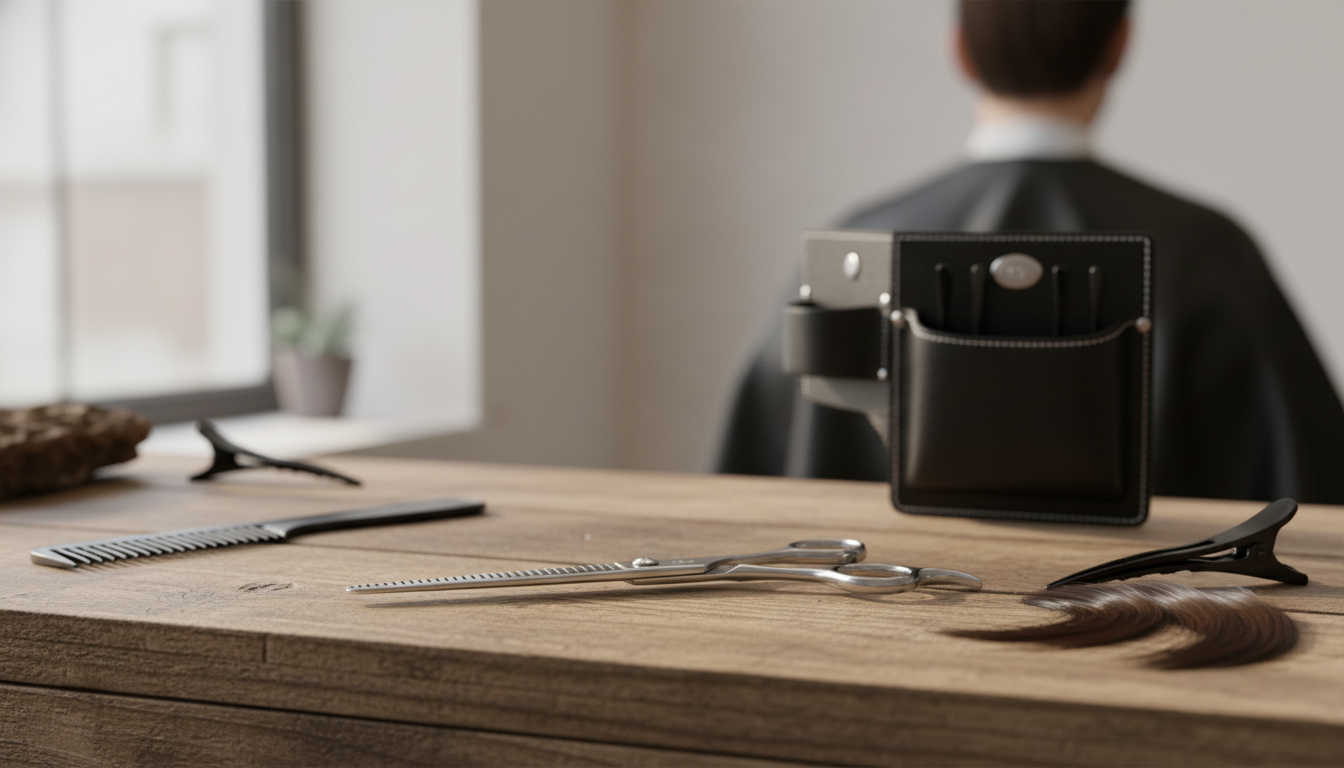
Chunker shears are built for stylists and barbers who need to remove weight quickly without leaving harsh steps behind. The 7-inch size adds reach and stability, which can feel especially helpful when working through larger panels, blending clipper work, or controlling dense hair that wants to “spring” back. This guide explains what traceless-style teeth are designed to accomplish, where chunkers fit in a haircut workflow, and how to keep them performing smoothly over time.
Chunkers typically remove more hair per close than fine-tooth thinners, which is why they’re favored for thick sections and time-saving debulking. The “traceless” idea is about minimizing visible track marks—those obvious lines that can show up when too much hair is removed in the same spot. Even with a traceless-style tooth design, results still depend heavily on technique: section size, cutting angle, and how much pressure you use all matter.
For the most natural finish, chunkers are often most effective in mid-lengths and interior weight. Repeated closures on the same line (especially close to the surface) can create patterning. A longer 7-inch tool can also support scissor-over-comb and broader panels where consistent blending matters more than micro-detailing.
Before choosing a 7-inch chunker, focus on how it will behave in daily use: stability, removal rate, comfort, and how easily it moves through hair.
| Factor | Best When | Notes |
|---|---|---|
| 7-inch length | Working on medium-to-long hair, larger sections, scissor-over-comb | More reach; can feel less nimble for detail work around tight areas |
| Chunker teeth (higher bulk removal) | Debulking dense hair and speeding up blending | Use lighter pressure to avoid removing too much at once |
| Traceless-style blending | Smoothing transitions after bulk removal | Technique reduces track marks: vary placement and avoid repeated cuts on the same line |
| Adjustable tension | Daily use across different hair types | Correct tension supports clean closure and reduces strain |
Chunkers are powerful—so the cleanest results usually come from a “less first, then refine” approach. Instead of chasing perfection with repeated cuts in one area, aim for gradual weight reduction and controlled blending.
Because chunkers have teeth, they’re more likely to collect fine hairs and moisture near the pivot. A quick routine keeps the action smooth and helps protect the cutting edge.
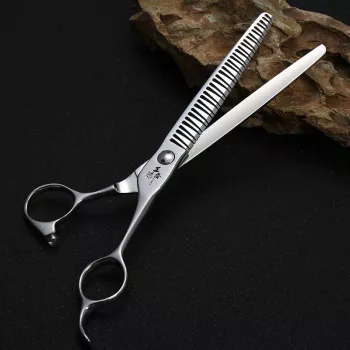
Model: 7-Inch 3D Gradient Traceless Teeth Chunker Shears
Availability: In stock
Price: $132.32 (USD)
Chunker shears typically remove more hair per cut, making them faster for debulking dense sections. Thinning shears often remove less hair and are commonly used to refine, soften, and “polish” transitions, though tooth pattern and technique can shift how either tool behaves.
Use light pressure, stagger your placement, and work diagonally instead of repeatedly closing on the same line. Staying in mid-lengths and interior weight (rather than cutting right along the perimeter) also helps keep blending natural.
Oil the pivot regularly—often daily if the shears are used frequently—so the action stays smooth. Sharpening is best scheduled when you notice snagging, folding hair, or needing extra force to close, and it’s typically handled by a professional based on your usage volume.











Leave a comment