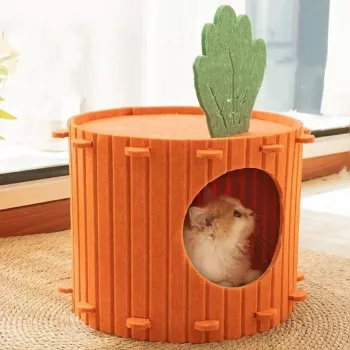
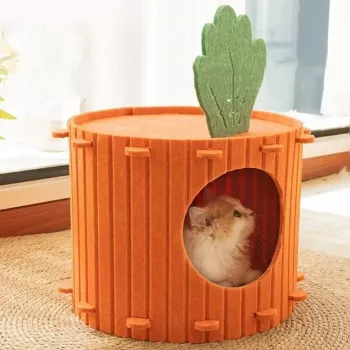
Some cats nap anywhere, while others insist on a private, covered spot that feels like a little cave. A burrowing den gives that tucked-in security—plus a warm, quiet place to decompress. The carrot-shaped Cozy Carrot Cat Den & Burrowing House blends playful decor with a cozy, enclosed resting space that encourages nesting, hiding, and long, uninterrupted naps.
Covered beds tap into what many cats naturally seek: safety, warmth, and control over their personal space. If a cat regularly disappears under blankets, wedges into closets, or curls up behind furniture, a den-style bed can offer the same comfort—without the guesswork.
For additional environment tips, cat welfare resources like the American Association of Feline Practitioners (AAFP) and International Cat Care highlight the value of predictable “safe zones” and cozy resting areas for reducing stress.
A den only works if it’s inviting. The Cozy Carrot Cat Den & Burrowing House balances a whimsical look with the practical details cats care about: a sheltered interior and an easy-to-approach opening.
| Feature | Covered den | Open bed |
|---|---|---|
| Privacy | High—enclosed sides and top | Low—fully exposed |
| Warmth retention | Typically higher | Depends on room temperature |
| Best for | Shy cats, burrowers, cats that spook easily | Cats that sprawl and prefer visibility |
| Placement flexibility | Great for corners and under tables | Works anywhere but may feel exposed in high-traffic spots |
Placement can make or break whether a cat adopts a new den quickly. The goal is to create a location that feels calm, predictable, and slightly sheltered.
If playtime tends to amp your cat up, pairing calm rest with a food-puzzle style toy can help round out their routine. The Cat Swing Feeder Toy offers a simple way to add enrichment before your cat heads back to their “cave” for a nap.
Some cats move in immediately. Others need a few days (or a week) of low-pressure introduction—especially if they’re cautious or sensitive to change.
In cooler months, warmth can be especially persuasive. If your cat tolerates clothing, the Pet Polyester Sherpa Vest can help retain body heat during lounging—making the den feel even more inviting when floors are chilly.
A clean den is more attractive to your cat and more pleasant for the household. Light, frequent upkeep usually works better than occasional deep cleaning.
Many shy cats prefer enclosed spaces because the walls and roof help them feel protected. Introduce the den slowly with familiar scents and treats at the entrance, and place it in a quiet corner so your cat can explore without pressure.
Shake out loose fur often and use a lint roller or handheld vacuum to reduce buildup. If you use a blanket or liner, wash it regularly, and keep the den away from litter areas so odors don’t cling to the fabric.
Yes, with a supervised introduction at first to ensure your kitten can enter and exit easily. Place the den on a stable, non-slip surface and avoid using any added accessories with strings or loose parts inside.









Leave a comment