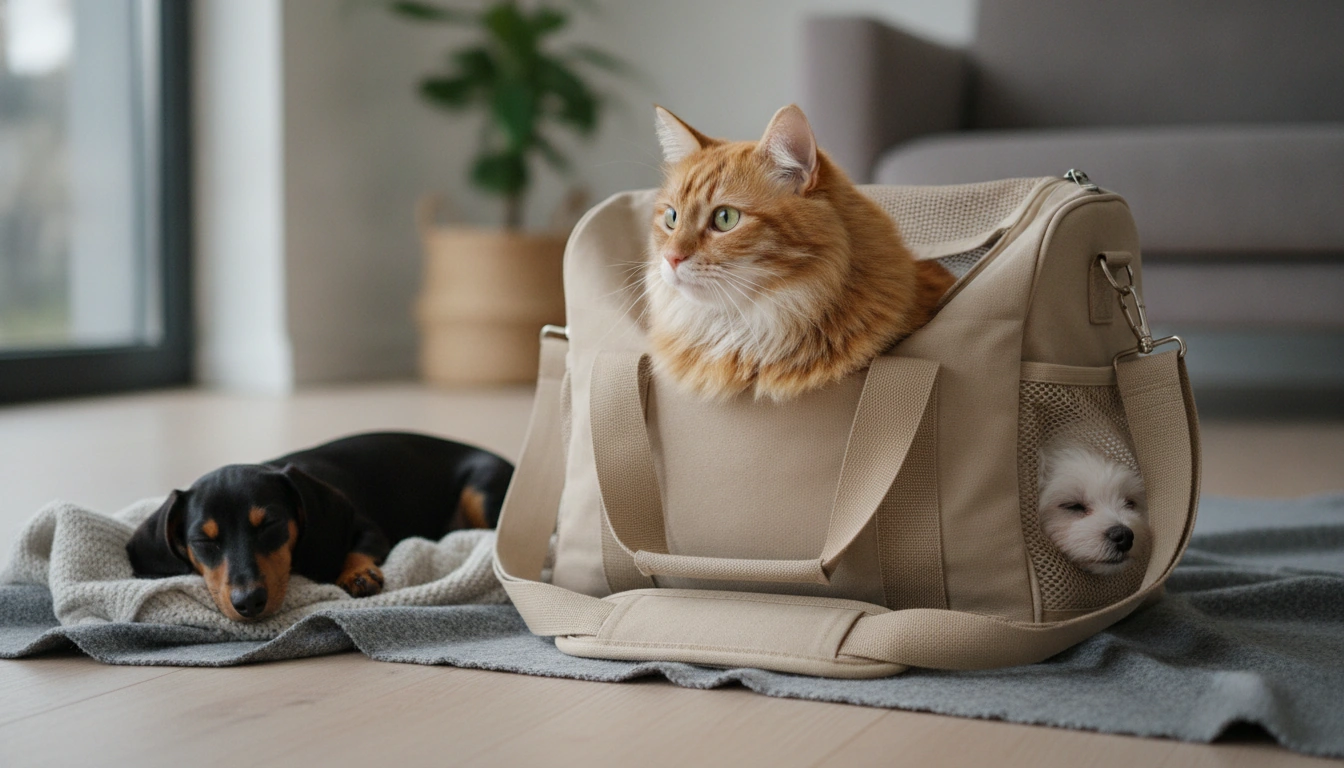
Most travel shoulder bag pet carriers are designed for cats and small dogs in the “small companion” range—typically up to about 10–15 pounds, depending on the specific bag’s dimensions and structure. A good fit isn’t only about weight, though. Your pet should be able to comfortably sit or stand, turn around, and lie down without being cramped, while still feeling secure enough to settle.
As a practical reference, many average adult cats fit well in a shoulder carrier, and small dog breeds with compact builds (like toy and small terrier sizes) often do too. Longer-bodied pets may need more interior length even if they’re light, while stockier pets may need more width and a sturdier base panel to prevent sagging.
Start with measurements. Measure your pet’s length (base of neck to base of tail) and height (floor to top of shoulders). Compare those numbers to the carrier’s interior dimensions, not just the exterior size label. A carrier that’s technically “rated” for your pet’s weight can still feel tight if the interior is short or narrow.
Also consider temperament and travel style. Calm pets may be fine with a snugger, den-like space, while anxious or wiggly pets tend to do better with a bit more room and strong ventilation. For shoulder bags specifically, look for a supportive bottom and stable straps so your pet’s weight stays evenly distributed against your body.
For a deeper breakdown of fit, ventilation, and what to check before buying, visit the complete guide here: https://estelere.com/guide-breathable-shoulder-pet-carrier-cats-small-dogs/.
Measure length from the base of the neck to the base of the tail, and height from the floor to the top of the shoulders. Compare those measurements to the carrier’s interior length and height so your pet can turn and lie down comfortably.










Leave a comment