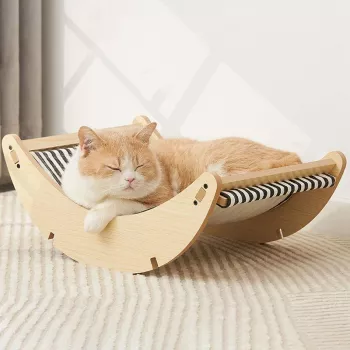
A rocking bed combines a cozy lounge surface with slow, soothing movement that many cats find settling. The best designs feel stable underfoot, rock only with your cat’s natural shifting weight, and look right at home alongside everyday furniture. Below is a practical guide to choosing a wooden cat rocking bed, helping your cat accept it, and placing it where it gets used.
Most cat beds stay completely still, which is great for deep sleep—but some cats relax even faster with a hint of movement. A rocking bed stands out because it blends “safe and grounded” with just enough motion to feel like a gentle sway.
For additional ideas on setting up a home that supports natural feline behaviors (rest, play, watch, hide), see guidance from International Cat Care and the ASPCA.
A rocking bed should feel inviting, not unpredictable. Before choosing one, focus on how it moves, how it supports your cat’s body, and whether it stays put on your floors.
| Feature | Why it matters | What to look for |
|---|---|---|
| Controlled rocking | Prevents wobble and builds confidence | Wide rocker rails, balanced curve |
| Traction | Helps cats step in/out safely | Non-slip pad, textured fabric, or grippy insert |
| Smooth edges | Protects paws and coats | Rounded corners, well-sanded wood |
| Easy cleaning | Reduces odor buildup | Removable cushion or wipeable surface |
| Floor protection | Avoids sliding and scratches | Rubber feet, felt pads, or anti-slip mat |
Cats don’t all approach new furniture the same way. Matching the bed’s height, stability, and “feel” to your cat’s age and confidence level can make the difference between a daily favorite and a dust collector.
Placement is a huge part of whether a cat bed gets used. Cats like comfort, but they also like control—being able to observe without feeling exposed.
If your cat gravitates toward gentle movement—kneading on soft blankets, leaning into couch cushions, or settling after active play—a rocker-style bed can become a favorite cooldown station. The Wooden Cat Rocking Bed offers a dedicated lounging surface with a curved base designed for subtle motion.
To build a complete “cat zone,” pair a ground-level rocker with a vertical hangout for perching and observation. A tall option like the Large Multi-Level Cat Tree with Spacious Condos, Hammocks, and Sisal Scratching Posts gives climbers an alternate place to nap, watch windows, and scratch. For an easy finishing touch near the resting area, the Ceramic Peach Heart Pet Bowl can help keep food or water stations stylish and separate from sleeping spots (many cats prefer distance between the two).
Yes, as long as the bed is stable, has a low entry height, and provides good traction. For extra safety, place it on a non-slip mat and position it against a wall during the first few days while your cat gets comfortable.
Start in a quiet spot and add familiar bedding so it smells like home. Use treats or a small pinch of catnip, and let your cat create the motion—avoid pushing the bed while your cat is on it early on.
Look for a smooth, sealed, pet-safe finish with no rough edges or splinters. If the product has a “new” smell, let it air out before introducing it so strong odors don’t discourage use.











Leave a comment