
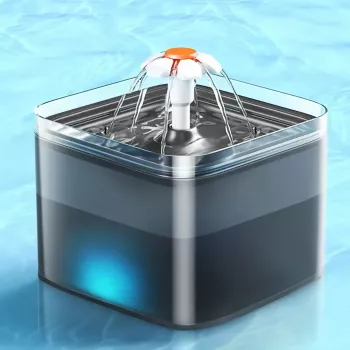
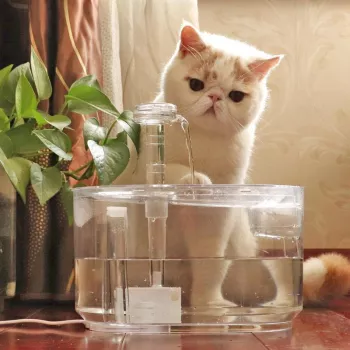
Most LED cat water fountains use a multi-stage filtration setup designed to keep water clearer, fresher-smelling, and more appealing to cats. The most common configuration is a replaceable cartridge that combines activated carbon (to reduce odors and improve taste) with a sponge or mesh pre-filter (to trap hair, food crumbs, and larger debris). Some models also include an additional foam ring or intake sponge to protect the pump and keep circulation steady.
Activated carbon filter cartridge: This is the primary “freshness” filter. Carbon helps reduce chlorine taste, odors, and some organic impurities that can make water less appealing.
Pre-filter sponge/foam: Positioned near the pump or intake, this catches fur and sediment before it clogs the motor. It’s usually washable and reusable, but it still needs routine cleaning.
Multi-layer composite filters: Many LED fountains bundle carbon with cotton, PP fiber, or a fine mesh layer to improve particle capture while keeping flow strong.
A practical baseline for most households is to replace the main carbon-based filter every 2–4 weeks. Replace it closer to the 2-week mark if you have multiple cats, a heavy shedder, visible debris buildup, or if the fountain sits in a dusty area. If your cat is sensitive to taste or you notice odors returning sooner, swapping the cartridge more frequently can help.
The pre-filter sponge is often reusable: rinse it thoroughly and clean it weekly (or more often if you see slime or hair). Replace the sponge when it no longer rinses clean, starts to tear, or stays odor-y even after washing.
Reduced water flow, a louder pump, slimy residue, lingering odor, or your cat suddenly drinking less can all point to a saturated filter or a clogged pre-filter. Keeping a regular replacement schedule also helps protect the pump from premature wear.
For more details on LED visibility features and day-to-day fountain care, visit the full guide: https://estelere.com/guide-led-cat-water-fountain-night-visible-fresh-water/.
Unplug the fountain first, then wash removable parts with warm water and mild soap while keeping the LED area and power connections dry. Wipe the LED housing with a damp cloth instead of submerging it, and let everything fully dry before reassembling and plugging it back in.










Leave a comment